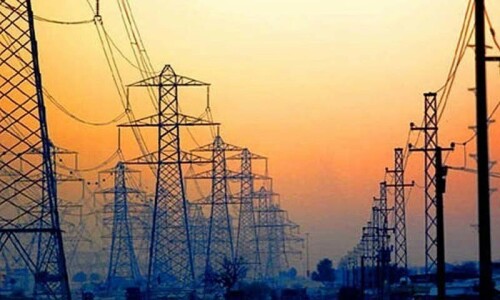
BY raising gas prices by up to 113pc for six months, the coalition government has implemented another IMF-mandated prior action for the resumption of its stalled bailout package. Even if the hike had not been ‘imposed’, an increase in the rates would have been inevitable to save the two gas companies from bankruptcy.
The increase — to take effect from last month — will help the government recover Rs310bn from consumers in the second half of the current fiscal and slow down the build-up in gas sector debt. Another rise in gas prices is expected from July.
If the gas sector’s long-term sustainability is to be ensured, the authorities will have to move beyond periodic hikes in prices to linking gas rates to the global market. Indeed, this will be tough for both the industry and residential users of the piped fuel because it will involve the removal of massive, unsustainable subsidies.
But it is time that a quarter of Pakistani households connected to piped gas stopped their wasteful and inefficient usage while the rest of the population, mostly low-income people, are forced to use more expensive alternatives to cook and heat their homes.
Likewise, exporters must move to higher value-added exports rather than blackmailing every government into subsidising their inefficiencies.
Such a step should also help the government move towards the goal of uniform gas pricing nationwide, eliminating the cost advantage to Karachi-based textile and other export industries over their counterparts from Punjab and upcountry.
Pakistan’s economic issues are long-standing and their solutions — though tough — known to everyone. However, it is unfortunate that no government has ever had the political will to sort them out.
Whatever half-hearted ‘reforms’ successive governments initiated were implemented under pressure from international creditors. This has brought us to a situation where the global rating agency Fitch has downgraded Pakistan’s long-term foreign currency issuer default rating to ‘CCC-’ from ‘CCC+’, citing further worsening in liquidity and policy risks along with pressure on reserves.
The drop comes four months after Fitch revised down the ranking to CCC+. It said the downgrade reflected a sharp deterioration in external liquidity and funding conditions, along with the decline in foreign exchange reserves to critical levels.
The agency assumes a revival of the IMF programme but doesn’t rule out “large risks to continued programme performance and funding, including in the run-up to this year’s elections”. In its view, a default or debt restructuring is an increasingly real possibility as the country’s reserves drop to less than three weeks of imports.
With Pakistan’s credibility at its lowest point and the ruling elite showing no sign of a desire to change their lifestyles, it is foolish to expect the world to bail us out. Why should it unless we are willing to take substantial measures ourselves?
Published in Dawn, February 15th, 2023