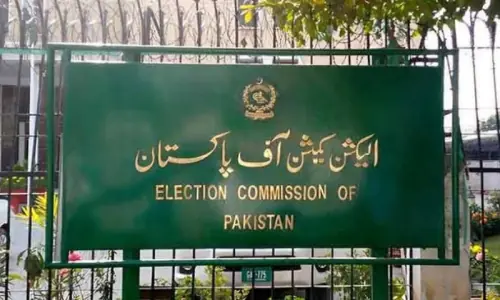
The Pakistan Telecommunication Authority (PTA) has banned popular online encyclopedia Wikipedia in the country for not “blocking/removing sacrilegious content” within the 48-hour deadline given to the website, a spokesperson confirmed on Saturday.
Wikipedia is a free, crowdsourced, editable online encyclopedia often used as a starting point by millions across the world for basic information.
The PTA had on Wednesday degraded Wikipedia services countrywide for not complying with the directives for the removal of controversial content from the website.
The regulator said the website had neither responded to its requests, nor taken down the content in question.
Speaking to Dawn.com, PTA spokesperson Malahat Obaid said the ban had primarily been imposed for non-compliance with the orders.
“The decision can be reviewed once Wikipedia removes sacrilegious content that has been identified by the regulatory authority,” the spokesperson added.
Users are met with “this site cannot be reached” when trying to access the website.

Yesterday, the Wikimedia Foundation, the charity that runs Wikipedia, said it “does not make decisions around what content is included on Wikipedia or how that content is maintained”.
It added that this is “by design to ensure that articles are the result of many people coming together to determine what information should be presented on the site, resulting in richer, more neutral articles”.
“We believe that access to knowledge is a human right. A block of Wikipedia in Pakistan denies the fifth most populous nation in the world access to the largest free knowledge repository. If it continues, it will also deprive everyone access to Pakistan’s history and culture,” it said.
It goes on to say: “We hope that the Pakistan government joins with the Wikimedia Foundation in a commitment to knowledge as a human right and restores access to Wikipedia and Wikimedia projects promptly, so that the people of Pakistan can continue to receive and share knowledge with the world.”
In a statement earlier this week, the telecom regulator said it had approached Wikipedia to block or remove the content in question by issuing a notice under “applicable law and court order(s)”.
“An opportunity of hearing was also provided, however, the platform neither complied by removing the blasphemous content nor appeared before the authority,” the statement had said.
“Given the intentional failure on part of the platform to comply with the directions of PTA, the services of Wikipedia have been degraded for 48 hours with the direction to block/remove the reported content,” the statement added.
The regulator warned that in case of non-compliance, Wikipedia would be blocked in the country and its restoration would be “reconsidered subjecting to blocking/removal of the reported unlawful content”.
‘Silencing of dissent’
Free speech campaigners have highlighted what they say is a pattern of rising government censorship of print and electronic media.
“There’s just been a concerted effort to exert greater control over content on the internet,” digital rights activist Usama Khilji told AFP. “The main purpose is to silence any dissent. A lot of times blasphemy is weaponised for that purpose.”
Khilji said courts and the regulator must realise that Wikipedia is a “crowd-sourced platform where anyone with an account can edit articles, which they can also do instead of blocking the entire website”.
In a comment to AFP yesterday, he said the ban is “disproportionate, unconstitutional, and quite ridiculous”.
Wielding the ban hammer
This is not the first time the authority has taken notice of objectionable content on the platform. In December 2020, the PTA had issued notices to Wikipedia and Google Inc for “disseminating sacrilegious content”.
Pakistan blocked YouTube from 2012 to 2016. In recent years, the country has also blocked the wildly popular video-sharing app TikTok several times over “indecent” and “immoral” content.