0
0

 THE government has recently embarked upon the privatization and divestment of its strategic industrial units. Steel Mills, the lone national steel-making facility, is being sold to the private sector and will be followed by divesting Karachi Shipyard & Engineering Works, the only shipbuilding and ship-repairing facility.
Indeed, there must be compelling reasons for the government to sell-off these strategic units, though the heavy engineering industry—termed as prime mover for the economic growth—-flourish under the public sector elsewhere in the world. Both developing, as well as industrialized countries provide sustainable subsidies to such enterprises because of their strategic significance.
Likewise, plans are under way to privatize the remaining units of State Engineering Corporation, namely Heavy Mechanical Complex (HMC) Taxila, Heavy Electrical Complex (HEC) Hattar, Pakistan Machine Tool Factory (PMTF) Karachi and Enar Petrotech Services Karachi (engineering consulting company).
Expression of Interest (EOI) for acquisition of total shares and management control of HMC, in the first phase, is expected to be issued by the Privatization Commission sometime end January/early February 2006.
Heavy Mechanical Complex, commonly known as HMC, it has the largest product design office in the country, equipped with computer-aided designing (CAD) and computer-aided engineering (CAE) facilities. The company, which is ISO 9001 certified, has authorization to use prestigious ASME stamp code for boilers, pressure vessels and piping etc.
Incorporated as a private limited company, HMC has a paid up capital of Rs1,077 million, which is entirely owned by the government. A board of directors nominated by the government manages its corporate affairs.
Since its having gone into commercial production in 1971, the company has played a crucial role in the industrial and socio-economic development. Its main contribution has been in achieving self-reliance in the sector through import substitution, saving billions of dollars and, at the same time, earning millions of dollars through export promotion.
For almost two decades, HMC remained flagship of national prime engineering industries, having earned recognition as leading manufacturers of capital goods of international standards. The company earned significant profits, provided employment to thousands, trained hundreds of engineers and technicians, and developed new products for defence and strategic industries.
It has designed, manufactured and installed 23 sugar mills and five cement plants, of various capacities, and 35,000 tons of equipment for power plants.
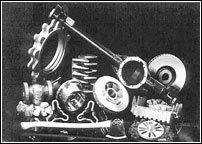
A host of other engineering goods manufactured by the HMC include road construction machinery, industrial boilers, various types of cranes, railway equipment, truck chassis and axles, equipment for fertilizer plants and oil refineries, besides a variety of steel structure, castings and forging.
The complex enjoys the singular distinction of successfully placing Pakistan on export map of the world that no other domestic engineering company, either in public or private sector, can boast similar achievement.
It has successfully executed a large number of contracts, in many countries, which were won against international competition. The turnkey projects, which related to design, engineering, construction and commissioning of three sugar mills and a cement plant, were completed in Indonesia and Bangladesh.
In addition, its various products such as construction machinery, electric overhead travelling cranes, steel structure, boilers, railway materials and equipment for sugar and cement industry have been exported to Bangladesh, Afghanistan, Sri Lanka, Ghana, Uganda, Kenya and the UAE. The company is registered with international donor agencies and governments of the respective countries.
The 1990s, however, saw the decline of the company as its order book substantially reduced as a result of poor investment climate and slow industrial development. This resulted in gross under- utilization of its installed production capacity, estimated to be 35,000 tons of finished goods per year. The company suffered heavy losses and has not recovered since then. It has accumulated losses of Rs2,776 million by the year ending June 2005. This eroded the paid-up capital and the company has a negative equity at present.
Efforts were made, during the tenure of past governments, to restructure HMC making it a viable entity again but it did not yield positive results, mainly because of half-baked measures and lack of commitment on the part of the subsequent governments.
In the process, ‘golden handshake’ or ‘voluntary separation schemes’ were offered a number of times to its employees, bringing down its strength progressively from over 5,000 to present 1,057 workforce, resulting in reduced administration cost.
But, practically nothing was done to improve its financial health that became precarious over the years, as the company was unable to bear the burden of debt servicing of loan.
The government also withdrew various fiscal concessions and policy support for indigenization, which were available to HMC in the past. This was a major setback to the operations of the company that registered an annual average of Rs700 million sales proceeds compared to its potential of Rs3 billion.
The situation adversely affected implementation of its future plans to undertake the BMRE and to diversify its production programme meeting market demands, for which technology transfer arrangements were also lined up.
Fortunately, the company has once again got on its feet, financially as well as commercially. It has achieved sales target of Rs1,403 million during the year ending June 30, 2005, compared to Rs515 million in 2002-03, having earned Rs189 gross profit and Rs66 million operating profit. At present, the company has confirmed orders in hand valuing Rs2,927 million whereas additional orders are in the pipeline. Resultantly, the cash flow position has also improved.
As a consequence, it has repaid part of its loans, and now its long term loans stand at Rs409 million only, compared to Rs878 million in the year 2001-02.
The flexibility and general purpose nature of plant machinery installed at HMC, and its state-of-the-art design and engineering capabilities, allow diversification of activities of the company to cover industry, power, water, energy, agriculture and infrastructure sectors, meeting domestic and export requirements. It has signed contracts in the recent past for supply of cement plants, one each to Iran and Uzbekistan, which have not yet been materialized, and can be revived for implementation.
As the company has rebuilt its credentials for privatization, showing remarkable improvement in recent times, and offers the potential for economical revival, perhaps it is the most opportune time to sell it off.
The present improved overall investment climate will be of great support in locating its buyers, though not yet assessed.
Nonetheless, privatization of engineering industrial units is a complex issue, and has produced dismal results in the past. Since 1992, six companies of the State Engineering Corporation—all prime industrial units and most of these profitable at the time of privatization—have been transferred to private sector. These include Karachi Pipe Mills Karachi, Metropolitan Steel Corporation Karachi, Quality Steel Works Karachi, Pakistan Switchgear Ltd Lahore, Textile Machinery Corporation Karachi and Pioneer Steel Mills Lahore.
These companies were sold at a throwaway price of paltry sum of Rs140 million in total, whereas these enterprises, mostly public limited companies, were paying cumulative revenues of similar amount annually to the government.
Sadly, all these companies, except Pioneer Steel Mills, remain closed down since take-over. It transpired that the buyers were simply interested in real estate of these companies and never intended to keep these as running enterprises.
Similarly, operations of the two other industrial units of the State Engineering Corporation are at standstill as a result of privatization process though these factories could not be sold out. The assets of Spinning Machinery Company of Pakistan at Lahore, after its closure, were transferred to Pakistan Steel Mills. All production workshops of Pakistan Engineering Company Ltd (PECO) Lahore are closed down, except fabrication of electricity transmission towers, as a result of its privatization process, which is ongoing, unsuccessfully, for the last decade or so.
Thus, the objectives of privatization could not be achieved in case of engineering industrial units divested during the period 1992-2000. These units had provided a strong industrial base that has been eroded in recent years due to closure of these companies, resulting in disruption of industrial activity, affecting production at national level and increased dependence on imported sources of supplies, besides creating large scale unemployment.
On the other hand, privatization, in the past, of a few engineering industrial units owned by other state corporations have been successful that were not capital-intensive enterprises. These include, Millat Tractors, Al-Ghazi Tractors, Balochistan Wheels, Bolan Castings, Indus Steel Pipe and Ravi Engineering, which all are single-product-manufacturing facilities. But the most important aspect of their transactions was that the new owners were committed to run these companies, instead of simply investing in the land assets.
There are however alarming reports that there were no buyers for Karachi Shipyard as it has no free land attached to it, whereas response for Pakistan steel Mills is good but again the prospective buyers seem to be more interested in its enormous real estate.
There is therefore a need to undertake privatization of HMC and other engineering units through a carefully modulated strategy, learning from the past experience. The company owns 571 acres of prime land of which only 70 acres is covered area (factory and housing colony), that may attract the land mafia to invest.
The government should, therefore, locate serious domestic as well as foreign investors, ensuring that the pre-qualified or post-qualified bidders for HMC, as the case may be, were committed to operate it as a running unit.
The prospective investors should come up with a definite programme for upgrading of production facilities and technology at the Complex in immediate future. The government will be well advised to undertake divestment process of the HMC on a fast track basis, in view of its peculiar nature. This will ensure that during interim period of the privatization, the company operations do not close down, as was the case with other engineering industrial units under privatization.
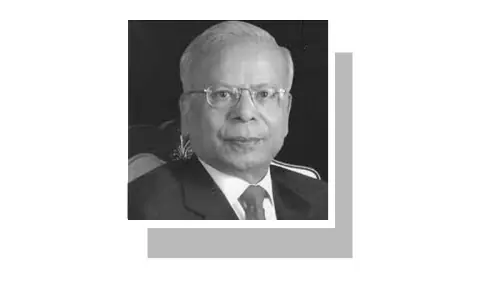
(The writer is a former Chairman of Heavy Mechanical Complex, Taxila)