WASHINGTON: As Pakistan anticipates the arrival of the International Monetary Fund’s team to revive the stalled loan programme, experts have said the visit only offers a glimmer of hope with more robust reforms needed to stabilise the ailing economy.
Former heads of the State Bank of Pakistan (SBP) and Federal Board of Revenue have delineated reasons for economic instability and proposed ‘the way out’.
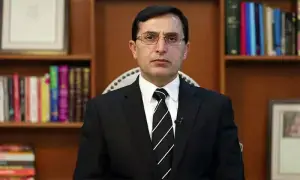
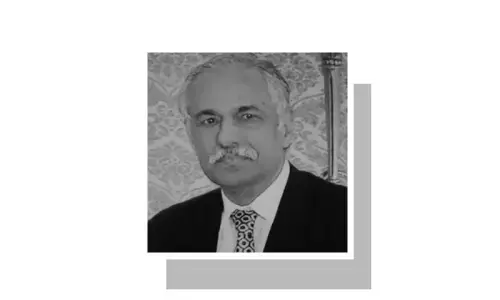
The former SBP acting governor, Murtaza Syed said the IMF team’s arrival offers a glimmer of hope that Pakistan will be able to stave off default.
In an OpEd published in an English daily on Monday, Mr Syed said in March 2021, Pakistan had managed to resume the loan programme and received global acclaim for its management of the Covid-19pandemic.
“Growth had picked up strongly while government debt had fallen by 6.5[per cent] of GDP, the current account was virtually balanced and foreign exchange reserves had increased by almost 50[pc] to $17 billion,” he wrote.
Despite these achievements, he added Pakistan’s growth model remained consumption- and imports-driven, with tax and exports forming a paltry share of GDP.
He argued troubles began with a hyper-expansionary budget in 2022, launched with the conviction that growth would solve all of Pakistan’s problems, but it did not. He said Pakistan could have approached the IMF early last year, when foreign exchange reserves were in a much stronger position.
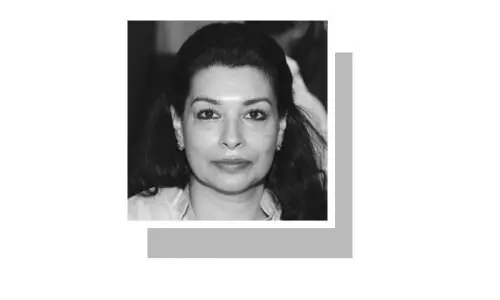
Former SBP governor Raza Baqir said global lenders like the IMF must step up and improve the framework for sovereign debt financing to help emerging economies out of debt distress.
Mr Baqir, who is currently the global head of sovereign advisory services at Alvarez & Marsal, said Sri Lanka was still waiting for debt relief from the IMF to rescue it from dire economic conditions.
He noted the outlook for emerging markets, like Pakistan, “has deteriorated very sharply” over the past two years despite some recent improvement in appetite. “The key reason is the rapid rise in public debt,” he told CNBC on Monday.
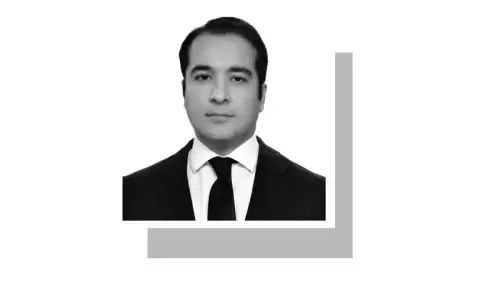
Former FBR chairman Shabbar Zaidi said “the nervous system of the Pakistani economy has become dysfunctional” as a result of the insatiable “desire for status quo.”
Mr Zaidi proposed a “financial emergency” for 15 years during which a consistent “pro-Pakistan and pro-poor” plan should be laid out.“
He also called for abrogating free trade agreements with China, Turkiye, Sri Lanka, Indonesia, Malaysia and other countries.
He suggested bringing retailers and wholesalers into the tax net and identifying ownership of each house and plot.“Withdraw all leases of agricultural land. No patta system in agriculture. Open trade with India. Start work on the Turkmenistan-Afghan-Pakistan-India gas pipeline,” he wrote in a series of tweets.
Published in Dawn, January 31st, 2023