0
0

ISLAMABAD: As Pakistan strives to end poliovirus for good, the year’s first environmental sample report showed encouraging signs as no virus was found in sewage samples collected from 37 cities.
However, samples from Lahore — the second biggest city after Karachi — tested positive, prompting the authorities to start a vaccination campaign in 26 union councils.
According to a statement, the National Institute of Health (NIH) has confirmed the detection of Type-1 Wild Poliovirus (WPV1) in an environmental sample collected from District Lahore (Gulshan Ravi ES site) in January 2023.
“This is the first positive environmental sample from Pakistan this year,” the statement added.
Last year, 37 positive environmental samples were detected from all over the country.
Dr Shahzad Baig, the head of Pakistan’s Polio Eradication Programme, while talking to Dawn called it a “big achievement” as a number of cities including Bannu, Dera Ismail Khan, Peshawar, Islamabad, Rawalpindi, Sialkot, Qilla Abdullah, Quetta, Karachi and Southern KP region were detected negative.
These cities had reported positive samples over the years.
He added only one sample from Lahore was found positive and as per protocols, a decision has been made to start a campaign in 26 UCs whose sewage falls into the area.
Dr Baig said Lahore’s environmental sample was found positive three times during 2022, but it was found negative in December.
He said the positive test indicated mass movement across the country.
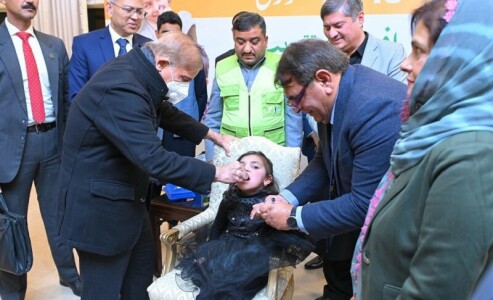
Federal Health Minister Abdul Qadir Patel has said the year’s first polio campaign was going on successfully.
“We are determined to eradicate the virus from the country,” he said as he requested parents to cooperate with the polio teams.
The sewage samples are important in detecting the virus’ prevalence in the country. If the virus is found in samples collected from any area, it is called positive. These samples are a basic parameter to determine the success of polio campaigns.
The presence of poliovirus in sewage also shows low immunity in children and they are at risk of contracting to catch the virus.
Pakistan and Afghanistan are the only two countries where the virus was still endemic.
In 2022, 20 children were paralysed by the virus in the country — all of them belong to the southern districts of KP. Of the 20, 17 were from North Waziristan, two from Lakki Marwat and one from South Waziristan.
Before cases were reported in 2022, Pakistan went without reporting a single case for almost 15 months.
Published in Dawn, January 20th, 2023