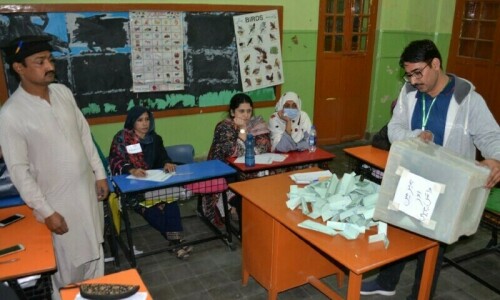
After much ado, the second phase of local government elections in Sindh was held on Sunday, despite the provincial government’s best efforts to delay this crucial democratic exercise indefinitely. Thanks to the ECP’s firmness, polls were held primarily in urban Sindh, including Karachi, Hyderabad and a few other districts, to elect representatives to the third tier.
Before Sunday’s electoral exercise, Pakistan’s biggest city had been without elected representation at the local level for nearly two and a half years. The polling process was largely peaceful, though marked by low turnout, for which various reasons were responsible.
The PPP has emerged as the largest party in Hyderabad and, surprisingly, Karachi. Jamaat-i-Islami, which ran a spirited campaign and lobbied for the polls, has the second-highest number of seats in Karachi, while the MQM-P, which traditionally dominated electoral politics in urban Sindh, sat this one out because of what it saw as unjust delimitations and ‘fake’ voters’ lists.
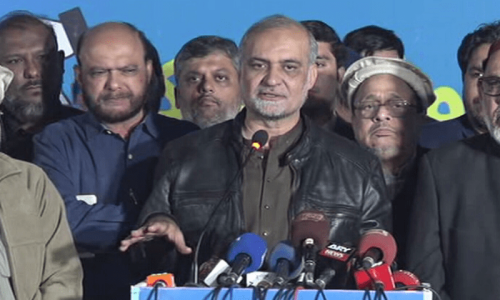
It is a matter of concern that the JI and PTI have raised questions about the transparency of the polls, particularly the late compilation of Karachi’s results, with both parties alleging that state machinery was used to rig the elections. As we have seen on the national stage, unless these allegations are adequately addressed, controversy will mar the LG polls and put a question mark over the transparency of the process. Therefore, if the opposition parties have solid proof of illegal practices being used to influence the polls, they must produce it, while the PPP-led administration and ECP must satisfy critics of the transparency of the LG polls.
Regardless of who emerges as the winner in Karachi, it is clear that the task for the new mayor of the megacity will be gargantuan. Ensuring that the elections were held was itself a major achievement; convincing all of their fairness will be even more challenging, while getting down to work and rebuilding this metropolis, and indeed the rest of Sindh, into a livable 21st-century urban space will be the toughest task of all.
For this, the 2013 Sindh local government law needs changes, particularly to empower the mayor of Karachi and other civic bodies in the province with the tools needed to run an effective administration. If the Karachi mayor remains a figurehead, and all municipal powers continue to be concentrated in the provincial government, the LG polls will largely be a cosmetic exercise.
Water and sewerage, solid waste, planning and building control, among other functions, must all be overseen by an elected mayor. Karachi is in ruins, and unless the provincial administration supports the incoming mayor with powers and finances, the deprivation of the megacity will only increase.
Published in Dawn, January 17th, 2023 The editorial has been updated to reflect the latest position.