SOUTH Punjab is one of Pakistan’s most fertile areas having extraordinary potential for agriculture and farming. Also, it is blessed with diligent, enterprising people who want to optimise the opportunities that the land has been endowed with. But, unfortunately, the region has failed to get the attention of the policymakers so far, which is hurting everyone’s cause; most of all, the national cause.
The region also has tremendous potential for tourism, with several shrines and tombs in Multan attracting devotees as well as tourists from across the country and from beyond the borders.
The region comprises Multan, Bahawalpur and Dera Ghazi (D.G.) Khan divisions, apart from Bhakkar and Jhang districts. It comprises 57 per cent of the total area and 36pc of the total population of Punjab. On paper, 35pc of the province budget is spent on the region. The reality, however, seems to be quite different.
Development programmes for health, education, social services, research and rural development have been initiated a number of times, but most of them fail to reach completion owing to lack of interest on the part of the authorities concerned. In fact, there is no dearth of projects that failed to move an inch beyond announcement.
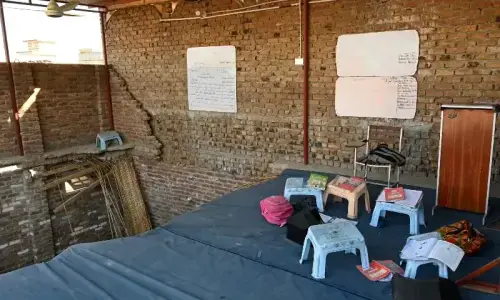
A recent example is that of the inauguration of the first school meant for transgenders in Multan that was done in July 2021, with the promise of extending the programme to other areas of the province as well. Nothing has changed on the ground at all. Instead, things have gone from bad to worse. Another example is that of the ‘approval’ of Thal University at the Livestock Experimentation Station (LSE) in Rakh Ghulaman of Kallur Kot tehsil. It was later shifted to Bhakkar city where the sub-campus of the University of Sargodha was renamed ‘Thal University’. If renaming an already existing educational institution in the name of development is what the government wants to do, then, naturally, real progress will always remain a pipe dream.
The health sector in the region is another victim of official apathy. Recently, more than a dozen patients, including five pregnant women, died on the way after they were referred from the rural health centre (RHC) in Jandanwala to the District Headquarters (DHQ) Hospital in Bhakkar. The tragedy took place because there was only one ambulance and even that was not ‘available’ at the time. Who will be held accountable for such incidents?
In 2012, the government at the time had approved the establishment of Thal Medical College in Bhakkar, but the project remains what it was always meant to be; a mere political stunt to make headlines. No one knows why even after 10 years, the ‘approved’ medical college has not been established.
One apparent reason behind all these acts of apathy is that national and provincial legislators from backward areas, like South Punjab, after being elected usually remain in either Islamabad or Lahore in their luxury homes, and rarely go back to the people who vote them to power.
When the legislators do not even live in the area where the development is needed, how can they claim to represent the people of such areas and why will they raise voice for the community when they never face the issues that the voters face every single day?
Another thorny issue is that of tribal feuds and enmity that make an impact on the voting pattern of people in most backward areas. Owing to tribal enmities, people vote in favour of candidates who, they think, can give them political and legal cover in such feuds. For a family having its sons and guardians in prison, no favour can be higher and more promising than getting them released.
That being so, politicians have learnt all the dirty tricks of the game, and lure innocent people with such favours. In the presence of green fields, massive potential for agriculture in Bhakkar, Jhang, Multan and Bhawalpur, coal and other resources in D.G Khan, and with livestock and human resource in abundance, the youths of the area wonder what the priorities of the policymakers happen to be.
Through efficient utilisation of all such human and natural resources, a little focus can enable South Punjab to help Pakistan increase its gross domestic product (GDP). This, in turn, will help Pakistan overcome the grave balance-of-payment problem and will also avert the possibility of default that we are currently believed to be facing.
Muhammad Mubashir Khan
Lahore
Published in Dawn, January 5th, 2023