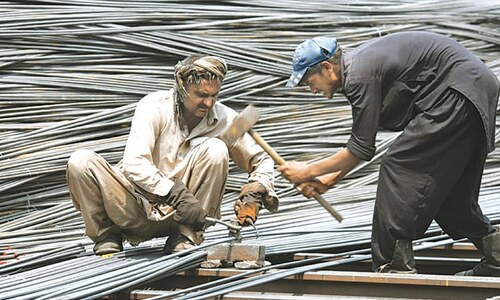
Cement, steel bar prices surge


KARACHI: The prices of cement and steel — the two key building materials — have jumped 41 per cent and 16pc, respectively, pushing up the cost which resulted in a construction slowdown in the outgoing calendar 2022.
The 50-kg cement bag rate rose to Rs1,043 from Rs738 on Dec 30, 2021 while per tonne steel bar prices increased to Rs224,500-225,500 from Rs194,500-197,500 a year ago.
Steel bars, which hold a 40-45pc share in the total cost of construction of a high-rise project, hit an all-time high at Rs235,000 per tonne in June 2022.
The massive rise in cement and steel bars has jacked up the construction cost of hi-rises and housing projects. “This is a cost-push price increase in cement rather than demand-pull because of thin construction activities due to ongoing winter and post- floods situation,” a cement maker said, attributing the price hike to rising coal prices, power and diesel rates and general inflationary trend.
On plummeting cement exports, he said, shipments to Sri Lanka and Bangladesh had been on a downward trajectory.
Costly building materials hit construction activities in 2022
Sri Lanka is facing a foreign exchange crisis where its month-on-month demand had plunged to 200,000 tonnes from 600,000 tonnes. Besides, Bangladesh is meeting its demand from Vietnam instead of Pakistani cement.
The country’s overall cement exports plunged to 1.547m tonnes fetching $77m in 5MFY23 from 3.129m that earned $116m in the same period last fiscal year, showed Pakistan Bureau of Statistics data. However, exporters got a good price of $50 per tonne as compared to $36.
Local cement sales in December may fall by 13-17pc year-on-year to 3.4-3.5m tonnes and 9-13pc month-on-month amid an overall economic slowdown and higher construction costs.
According to a note of Topline Securities, the average daily sales in the North and South regions are hovering at 89,000 tonnes a day and 22,000 tonnes a day, respectively, due to seasonal factors on the onset of the winter and thin construction activities.
In 1HFY23, local sales may post a decline of 16-20pc year-on-year. Lower offtake in local cement despatches is on the back of rising construction costs and inflationary impact restricting the demand growth.
Cement retail prices in December averaged at Rs1,030 per 50kg bag in the North which is more or less similar to November. In the South, average prices stood at Rs1,064 per bag, with an increase of Rs10/bag from November, the Topline Securities said.
Some recovery in 2HFY23 is anticipated as flood rehabilitation programmes gain pace while falling coal prices could also provide support to the sector margins going ahead.
Published in Dawn, january 1st, 2023