SAHIWAL: The district government has sought Rs45 million supplementary funds from the provincial government to develop a rural water supply scheme (RWSS) for the 5,000 inhabitants of Chak 49/12-L of Chichawatni tehsil who are exposed to high intake of arsenic in the groundwater.
Dawn learnt from sources the district health department completed a door-to-door survey and identified 217 sick patients suffering from the diseases directly linked to arsenic intake.
The move came after the reports of the Public Health Engineering Water Testing Laboratory confirmed arsenic and TDA (total dissolved solids) levels in village drinking water seven hundred times higher than World Health Organisation (WHO) standards.
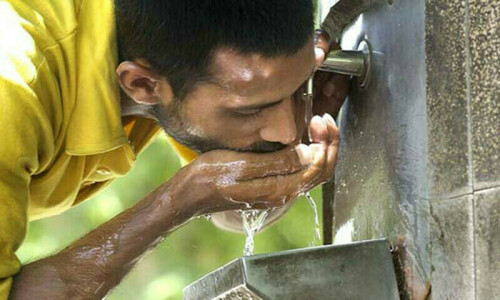
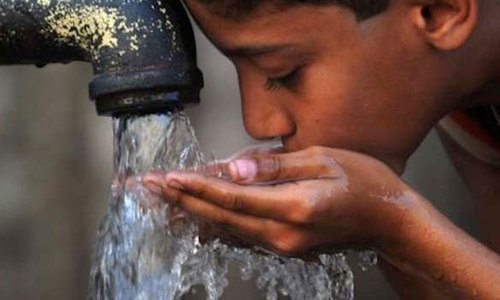
The district government has directed the inhabitants to refrain from using water from existing drinking water sources, i.e. hand pumps, tube wells, bore machines etc.
Deputy Commissioner Imtiaz Khichi said a two-pronged strategy had been adopted to deal with the problem. On a short-term basis, he added, the existing water filtration plant had been rehabilitated and it was providing 2,000 litre safe drinking water to the residents daily while the rural water supply scheme would be the long-term solution.
Sources said the Public Health Engineering Department (PHED) EXEN submitted a feasibility report of Rs45m for a comprehensive rural water supply scheme.
The PC-1 of the scheme has been forwarded to secretary, Housing Urban Development & Public Health Engineering Department by the DC office for the release of funds.
The current RO water filtration plant has been handed over to a local non-government organisation, Subhan Welfare Society.
Hafiz Faiz Muhiuddin, a schoolteacher and resident of the village who also works as the finance secretary of the society, told Dawn three loader rickshaws were supplying drinking water from the filtration plant to village homes. He said the society was charging Rs300 from each loader rickshaw driver against 1,000 liters of filtered water.
“This money is used to pay the electricity bill and other maintenance of the filtration plant in future,” he said and added Rs50,000 monthly were needed to run the filtration plant.
Muhammad Asif, one of the rickshaw drivers, told this correspondence in a village that they were providing one liter of filtered water to villagers by charging one rupee.
“From this Re1 amount, I pay to the committee and also earn my own living,” said Ali, another rickshaw driver.
Published in Dawn, December 14th, 2022