France, Spain to build hydrogen pipeline at a cost of $2.6bn
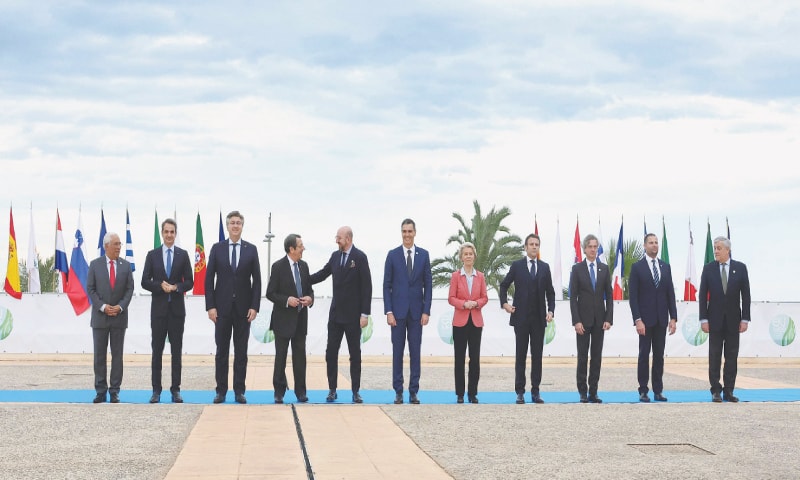
ALICANTE: France and Spain have agreed in principle to build an underwater pipeline between Marseille and Barcelona at a cost of $2.6 billion to carry green hydrogen, Spanish Prime Minister Pedro Sanchez said on Friday, adding he hoped the European Union would partly fund the project.
The pipeline will have a capacity of two million tonnes a year and be ready by the end of the decade, Sanchez said at a summit of Mediterranean European Union leaders in the south-eastern Spanish port city of Alicante.
The decision to pursue the project comes as an energy crisis caused by the war in Ukraine has accelerated European plans to bolster renewable energy as an alternative to Russian gas.
The corridor will make Iberia “a major energy hub” and form part of a “European hydrogen backbone” allowing the bloc to pump hydrogen across the continent as it seeks to produce 10 million tonnes of clean hydrogen a year and import a further 10 million tonnes by 2030, European Commission President Ursula von der Leyen said.
“Hydrogen is a game changer for Europe,” von der Leyen said. “We want to make hydrogen a central part of our energy system in the transition to climate neutrality.” Green hydrogen is made from electrolysers powered by renewable energy. Portuguese Prime Minister Antonio Costa said the Iberian peninsula’s abundance of sunshine and wind used for renewable energy would make producing the hydrogen competitive.
French President Emmanuel Macron said the pipeline could also be used to send hydrogen produced in France from nuclear energy - so-called red hydrogen - in the opposite direction.
Reuters reported earlier that the undersea part of the 455-kilometre pipeline would cost around two billion euros, rising to 3 billion depending on its route.
An additional pipeline connecting Spain and Portugal will cost 350 million euros, according to a document provided by Spain.
The submarine section will be known as BarMar, while the entire hydrogen corridor connecting Spain and Portugal to France will be called H2MED, Sanchez confirmed.
France, Spain and Portugal would apply for EU funds to pay for up to 50% of the cost. The other half would be funded by the three countries’ national grids.
Published in Dawn, December 10th, 2022