Ex-Albanian PM punched in face during anti-govt march


 6
6

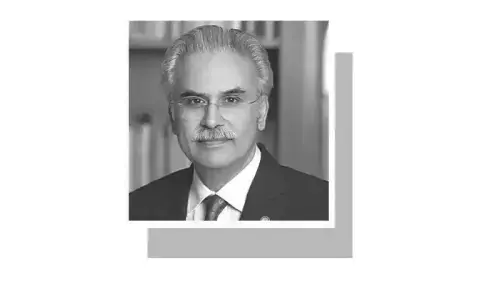
TIRANA: Albanian opposition leader Sali Berisha was punched in the face by a male bystander as he led a crowd of his party’s supporters to central Tirana for anti-government protests taking place metres away from the venue of an EU summit.
Thousands of opposition supporters gathered in the city on Tuesday as Albania hosts its first EU-Balkans summit, attended by leaders of European Union member states, to protest against the government of Prime Minister Edi Rama and demand early elections.
As Berisha, who leads the centre-right Democratic Party, walked in front of his supporters waving Albanian and EU flags, a man approached him and punched him in the face. Berisha had blood on his face but was later due to speak at the rally. The attacker was beaten by Berisha supporters and arrested by the police.
Berisha, a former president and prime minister, is banned from entering the United States over alleged corruption. He denies the charges.
EU seeks to reassure Western Balkans
A summit of European Union and Western Balkan leaders yielded few concrete steps on the region’s future in the wealthy EU but offered it hope for some progress next week, amid a better atmosphere in talks than previously.
European Council chief Charles Michel said he hoped there would be a “positive signal” at an EU summit on Dec 15-16 on Bosnia’s bid for EU candidacy status and German Chancellor Olaf Scholz said visa liberalisation for Kosovo was necessary. At a previous summit in June, Balkan leaders publicly and harshly criticised the EU for the lack of progress in accession talks amid disillusion that negotiations have not started or are stalled, years after they were promised eventual EU membership.
While reluctance to further enlarge the EU is still rife among the 27 member states, Russia’s invasion of Ukraine has led them to devote more energy to enhancing relations with the six Balkan countries of Albania, Bosnia, Kosovo, Montenegro, North Macedonia and Serbia.
Fears of spreading Russian and Chinese influence in the Western Balkans is also a key factor. Scholz spoke of a new mood in the EU regarding the region.
At the end of the summit in the Albanian capital Tirana, EU leaders reaffirmed their “full and unequivocal commitment to the EU membership perspective of the Western Balkans and call for the acceleration of the accession process”.
“We had our frustrations ... but we never gave up on this faith in the EU,” said Albanian Prime Minister Edi Rama, the summit host who in June had said slowness in the EU accession process for the region was a “disgrace.” “The progress made in the last years, no doubt also because of the war (in Ukraine) as an accelerator, is immense,” Rama said, speaking in English.
Serbia and Kosovo
On the sidelines, the EU drafted a new proposal for normalisation of ties between Serbia and Kosovo, its former rebellious province, with a clear timeline of actions, a senior EU diplomat said.
In moves towards integration, telecoms operators within the EU agreed to cut data roaming charges in the Western Balkans from Oct 2023, and Brussels pledged 1 billion euro in grants for energy. Balkans leaders would like to see much more, however.
“Kosovo will be submitting its application for EU membership by the end of this year,” its president, Vjosa Osmani-Sadriu, said, adding that she hopes next week’s EU summit would approve visa liberalisation for her country.
Belgian Prime Minister Alexander De Croo hinted that the path to accession will still be long for the region. “We know that there is progress, we know that there is an ambition to make this progress work faster... But there is no shortcut.”
Published in Dawn, December 7th, 2022