Centcom chief, COAS Munir agree to strengthen security cooperation

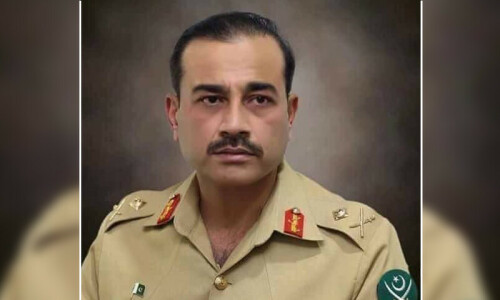
WASHINGTON: Gen Michael Erik Kurilla, the commander of the US Central Command (Centcom), conducted a video teleconference on Friday with Pakistan’s new army chief Gen Syed Asim Munir, and the two military leaders talked about strengthening security cooperation between Pakistan and the United States.
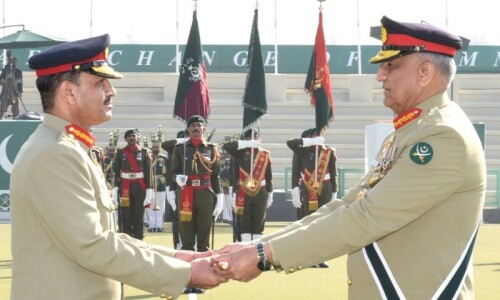
A brief statement, issued by the Centcom headquarters in Tampa, Florida, said Gen Kurilla spoke with Chief of Army Staff (COAS) Gen Munir, who replaced Gen Qamar Javed Bajwa on Nov 29, via video teleconference.
The statement pointed out that the two generals “have a previously established relationship from Gen Kurilla’s time as Centcom Chief of Staff.”
Gen Kurilla congratulated Gen Munir on his new position and “the two leaders discussed US-Pakistan security cooperation efforts and strengthening the bilateral relationship,” it added.
The US State Department issued a similar brief statement on Nov 29, when Dawn asked one of its spokespersons to comment on the change of command in Pakistan and on its possible impact on bilateral relations.
“For 75 years, the relationship between the United States and Pakistan has been a vital one. The United States looks forward to continuing to work with Pakistan to promote stability and prosperity for the people of Pakistan and the region,” the spokesperson said.
The State Department, however, said “the selection of senior military leaders is an internal Pakistani matter. I refer you to the government of Pakistan for any additional questions.”
Although brief, the statements cover the two main points of the relationship between the two nations — “security cooperation” and the desire to continue this cooperation.
The notes also indicate Washington’s willingness to respect the Pakistani military’s desire to stay away from politics and avoid mentioning issues that could be interpreted as political, such as Afghanistan.
Last week, a former White House staffer Lisa Curtis told a seminar in Washington that the US closely watches the change of command in Pakistan as it knows that the military has a major influence on the decision-making process. “I don’t think the future of US-Pakistan relations hinges on who will be the PM in Pakistan… more important is who will be the chief of army staff,” said Ms Curtis.
Published in Dawn, December 3rd, 2022