40
40

PAKISTAN’S representatives at the UN COP27 climate summit deserve commendation for leading a group of vulnerable countries in pulling off an unlikely diplomatic coup.
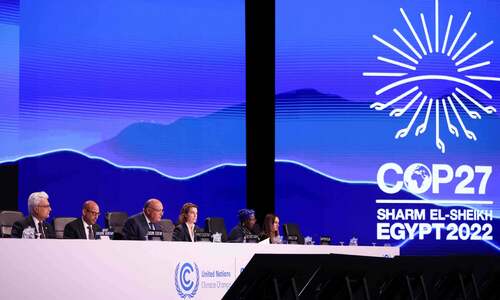
The summit concluded on Sunday in Egypt’s Sharm el-Sheikh with a hard-fought deal to establish a loss and damage fund for nations most vulnerable to climate change — an achievement that many had thought impossible till just days ago.
After the development, Pakistan’s Minister for Climate Change Sherry Rehman was credited internationally for leading the bloc known as the Group of 77 plus China, keeping it united, and thereby ensuring that a loss and damage fund, which had long eluded climate change campaigners, was finally agreed to before the conference disbanded till next year.
Reports in foreign media and Ms Rehman’s account of the breakthrough spoke of intense deliberations as negotiators worked round the clock to ensure that a deal was finalised before the COP27 participants headed home. Their commitment and dedication to ensuring climate justice must be applauded by all.
It may also be recalled that Pakistan fought to have the loss and damage fund officially included on this year’s agenda of the UN climate summit. It had been an important step, as powerful nations had long resisted the idea of a compensation fund, fearing it could open them to legal liabilities for causing devastating changes to the global environment because of unchecked industrialisation and consumerism.
However, Pakistan’s mission had been spurred by the devastation from the unprecedented monsoon and extreme heatwaves this year, and it is no mean feat that our representatives successfully leveraged those experiences to secure a package for climate justice on a global scale.
The Global Shield initiative announced last week had been a breakthrough in climate finance, but its scope is limited to helping climate-vulnerable nations secure themselves against the risks arising from natural disasters through insurance and other financial instruments. On the other hand, the loss and damage fund answers the question of climate reparations on a scale that insurance policies cannot and will not cover. At the heart of the fund is the idea that countries that pay the price for climate change must be compensated by the nations that are responsible for it.
It may be too early to celebrate, however, as the fund does not yet have anything in it, and the question of who must pay how much has been left for next year. Many also worry that powerful nations have managed to avoid another very important question — how to immediately mitigate global warming — amidst the buzz over the loss and damage fund. That is as much a critical concern for the survival of the human race and needs equally urgent attention.
Having secured this particular victory, Pakistan must now direct its efforts to help ensure progress on the other goals on the climate change agenda.
Published in Dawn, November 22nd, 2022