0
0

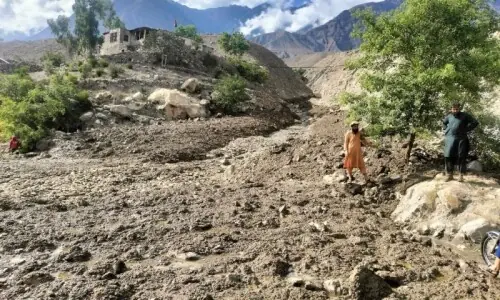
 SANAA, Dec 29: At least 30 Yemenis were killed in an overnight landslide which hit a village on a rocky slope near the capital Sanaa with 100 people still missing, an interior ministry official said on Thursday.
Thirty corpses had been recovered from the rubble after a landslide hit the small village of Al-Dhafeer, 40km west of Sanaa, while dozens were injured, he said.
Yemen’s Saba official news agency said that 25 out of the village’s 31 houses were destroyed and were buried under huge piles of rocks.
The number of deaths is expected to rise as some 100 residents, out of the village’s total population of some 270 people, are still missing and believed to be under the mud and rubble.
“Twenty-three bodies were recovered from one house only. They belonged to the same family,” a witness told AFP.
Three people have been recovered alive from under the rubble, Saba reported.
It was not immediately clear what caused the landslide. Yemen’s seismology centre had no word of an earthquake and there were no reports of severe weather.—AFP