ISLAMABAD: A new report stated that a rapid proliferation of private education institutions requires stronger oversight to ensure that quality and equity are not compromised.
The report titled “Global Education Monitoring Report 2022, non-state actors in education, who chooses who loses” conducted by Idara-i-Taleem-o-Aagahi (ITA) in joint collaboration with UNESCO talked about unregistered schools in detail.
It said that the trend of unregistered schools in Pakistan is very common as 18pc of primary and 14pc of lower secondary were being functioned without having regulation or registration from the government bodies concerned.
The report, which was released here on Monday, further said that out of 5,000 total schools in Rawalpindi two third of private schools have no registration, adding that under 2016-17 Private School Census, some 54,000 private schools offered pre-primary education in Punjab province under various categorisations, such as pre-nursery, nursery and prep.
The majority of programmes operated as unregulated entities, without government supervision and oversight, it said.
The report said less than 3pc of annual Gross Domestic Product (GDP) is being spent on education since last 12 years. Against this backdrop, public sector schools are insufficient in both supply and quality.
It added a franchise model of tutoring is prevalent in the country, with companies or academies running schools and tuition centres, and developing their own curriculum and textbooks.
The report further noted that those attending private institutions consistently score significantly higher than those enrolled in state schools. However, the report said after controlling for socioeconomic status the relative advantage in learning outcomes that private schools enjoy is reduced or eliminated.
The Covid-19 has both highlighted and exacerbated the existing issues in the education system of the country, adding that privately funded institutions with pupils of more financially stable backgrounds were often better prepared to cope with the implications of school closures and suspension of in-person teaching.
However, the report said with only 14.3pc of families across the country having access to a laptop or desktop, and just 4pc of the population knowing basic ICT skills, remote learning was much harder to organise for low-budget state schools, it said.
It added enrolment in private schools had also decreased due to Covid.
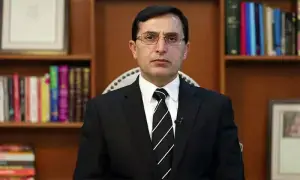
Speaking on the occasion, Additional Secretary Ministry of Federal Education and Professional Training Waseem Ajmal said that the report had shattered many myths about the private and the public sector schools as it gives global insights revealing that what works and what doesn’t.
He said the report had raised questions of effectiveness of many practices of learning outcomes, cost-efficiency and administration.
Mr Ajmal said that many aspects of the report needed to have a deliberation in consultation with all stakeholders for comprehensive policies.
Baela Raza Jamil, CEO ITA shared that in Pakistan private sector fills up critical gaps in education service provision in both urban and rural areas not just through pre-schools, schools, colleges and universities but also in the vital areas of disability services, teacher preparation, EdTech, textbooks and assessments.
Chairman Federal Board of Intermediate and secondary Education (FBISE) Qaiser Alam, Technical Advisor, Education Reforms KPK Irfan Muzaffar CEO and founder Teach For Pakistan, Khadija Bakhtiar also spoke on the occasion.
Published in Dawn, November 8th, 2022