Lack of facilities blamed for hike in breast cancer cases


 0
0


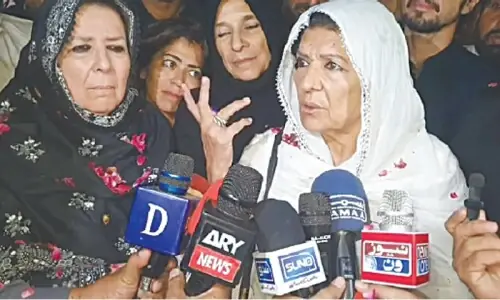
PESHAWAR: Experts at a seminar held here on Saturday warned of upward trend in breast cancer incidence in view of lack of facilities for early detection as health minister Taimur Khan Jhagra announced establishment of seven centres in as many divisions for providing quality care to breast cancer patients.
These centres would be set up in the district hospitals as part of Breast Cancer Early Detection initiative of the provincial government.
“The province lacks facilities as there are only eight mammography machines for the population of 35 million. Limited resources lead to weak health systems where the majority of women are diagnosed in late stages,” said Dr Akifullah Khan, director Institute of Radiotherapy and Nuclear Medicine (Irnum).
Speaking at an event held at the Irnum, Peshawar, in connection with Breast Cancer Awareness Month, he said that clinical examination, mammography, high resolution Doppler ultrasound machines were needed in the district hospitals. He said that there was no strategy or guidelines for the identification of at risk population and no infrastructure for screening.
Jhagra says centres for early detection of disease to be set up in seven divisions
Irnum, the prime cancer treatment facility in Khyber Pakhtunkhwa, provides radiotherapy and chemotherapy to patients in collaboration with teaching hospitals and accept all patients regardless of their stage of the disease, Dr Akifullah said.
He said that despite 20 years of awareness campaign against breast cancer the number of patients in stage three and four had risen.
Dr Ayub Rose, former director-general health services, said that prevalence of breast cancer in Pakistan was 19.33 per cent,oral cancer 9.40pc, lung 7.81pc, stomach 6.66pc and cervical cancer 6.56pc, which required attention.
Pakistan ranked third as it recorded 80,000 new cases and 40,000 deaths every year and one woman in nine risked breast cancer, he said.
“If diagnosed early, chances of survival are more than 90.5pc,” he said. He said the government should set up a separate breast cancer programme to utilise services of 23,000 health force of gynaecologists, women medical officers and lady health workers at the community level to scale up early detection efforts.
Health minister Taimur Jhagra, who was chief guest, said the Pakistan Tehreek-i-Insaf government was committed to providing quality care to breast cancer patients through free testing facilities in seven districts.
The programme aimed to install modern mammography machines in seven divisions, including Bannu, Dera Ismail Khan, Hazara, Kohat, Malakand, Mardan and Peshawar, he said.
The minister said cancer patients having Khyber Pakhtunkhwa identity cards were getting cashless services on Sehat Card Plus. “Our government accorded top priority to healthcare,” he said.
Dr Saima Abid, Public Health Association president, stressed early diagnosis and affordable treatment as the ailment killed an estimated 10 million people worldwide every year.
“It is one of the leading causes of death and socioeconomic burden. The patients have to bear the high cost in addition to facing social and psychological trauma,” she said.
Any woman over 40 years or having a family history of breast cancer should go for mammography test for early detection, she said.
Special secretary health Abid Kakakhel and Director Curative Services at Health Department, Dr Saeeda Bibi, also spoke on the occasion.
Published in Dawn, October 23th, 2022