9
9

“No nation can rise to the height of glory unless women are side by side with you,” said Father of the Nation Quaid-e-Azam Mohammed Ali Jinnah.
In the economic times we live in, where a global recession is right above us, full employment of a country’s population is a target many countries try to achieve, as it provides sustenance and enhances lives and lifestyles. A high standard of living impacts an individual and the nation positively.
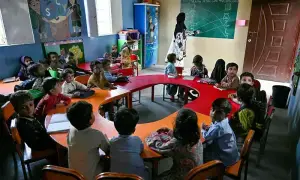
In Pakistan, roughly 48 per cent of its population comprises women. According to the latest surveys, only 85pc of that female population get primary education, 39pc get a secondary education, and only 9pc go above and beyond that. Pakistan ranks 145th out of 146 countries in the gender gap. So it is no surprise that we lack gender diversity in our corporate setups.
This ever-increasing gap in female representation in our country’s economic growth can be credited to various cultural and resource-related factors.
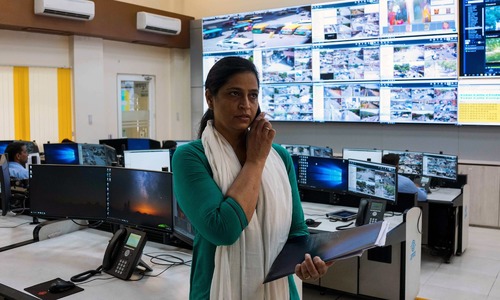
Women in leadership roles can formulate and implement policies that make it easier and safer for females to join the workforce
Growing up, it wasn’t uncommon for me to see that due to a lack of resources, a friend’s parents had to choose between either sending their sons to secondary schools or daughters; the final decision always came down to who will generate more resources in the long run.
I also saw friends who obtained higher education did not pursue their careers due to cultural reasons. Often the in-laws did not allow the girls to practise their degrees, and even if they did, the capabilities of a married woman were judged differently from an unmarried one.
Let’s take the example of medical schools where only 20pc of the females practice. This is a loss of valuable resources that the government of Pakistan allocates taxpayers’ money towards education in government medical colleges in hopes that they will contribute to the country when they qualify.
Whether it is the corporate or non-corporate sector, conventional or unconventional mode of employment, the lack of gender diversity in the country wastes a lot of our country’s resources.
Various studies suggest that greater gender equality leads to better economic performance, and it’s obvious that a slight change of mindsets and opportunities can put the other 48pc of our population to work. And thus, we can excel by utilising our female workforce along with the male one.
“We are victims of evil customs,” the man who formed this country said once. Mohammed Ali Jinnah was the biggest advocate of women’s contributions toward the progression of a nation. Considering how progressive and visionary a leader we had 75 years ago was, we haven’t taken many steps to turn his vision into reality.
But how can we revive this vision to utilise almost half of the country’s human resources?
Awareness
Education and awareness are not just for our little girls but for society. This involves the realisation that women’s differences from men are an asset, another perspective, a diversification, that will bring value to the corporate world.
Empowerment
An example of an empowering policy is the K Electric Returnship Programme. It supports women by empowering their choice to take a break. Since women want to and are naturally bound by their domestic responsibilities, returnship programmes offer a perfect balance for women with a few years of a gap on their resumes. It’s something that should be normalised in more work environments.
Safety
Women and their families need to feel comfortable in educational institutions and workplaces. Unfortunately, with growing cases of harassment, most families hesitate to send their daughters to higher education or work. Zero tolerance harassment policies, women on investigation panels and access to these resources are just the start.
Role models
Women are essential for leadership roles to form policies that make it easier and safer for women to join, feel comfortable and contribute toward a culture of empathy.
We need to look beyond our two-dimensional concept of growth and accept that it comes in more than one way through the diversity of thought, opinions and behaviours that, in the long run, present more prospects of prosperity.
Published in Dawn, The Business and Finance Weekly, September 26th, 2022