Iran denies link with Rushdie’s attacker, says writer and his supporters to blame

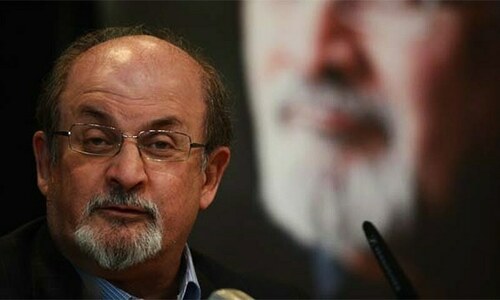
Iran “categorically” denied on Monday any link with the attacker who stabbed British writer Salman Rushdie, but blamed the writer himself.
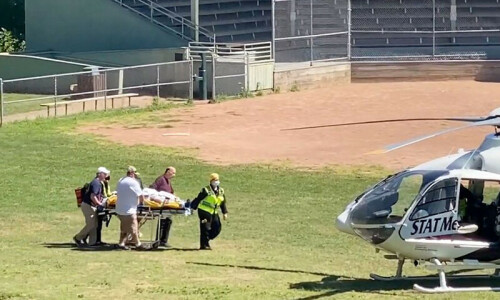
Rushdie is recovering after being stabbed repeatedly at a public appearance in New York state.
The suspected assailant, 24-year-old Hadi Matar from New Jersey, was wrestled to the ground by staff and other audience members before being taken into police custody. He was later arraigned in court and pleaded not guilty to attempted murder charges.
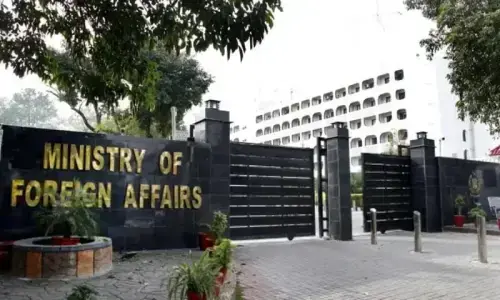
“We categorically deny” any link with the attack and “no one has the right to accuse the Islamic Republic of Iran,” said foreign ministry spokesman Nasser Kanani in Tehran’s first official reaction to Friday’s stabbing.
“In this attack, we do not consider anyone other than Salman Rushdie and his supporters worthy of blame and even condemnation,” he said at his weekly press conference in Tehran.
“By insulting the sacred matters of Islam and crossing the red lines of more than one and a half billion Muslims and all followers of the divine religions, Salman Rushdie has exposed himself to the anger and rage of the people.”
Freedom of speech does not justify Rushdie’s insults against religion in his writing, Kanani added.
The Indian-born writer has lived with a bounty on his head since the publication of his 1988 novel The Satanic Verses, which is viewed by some Muslims as containing blasphemous passages.
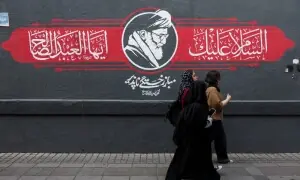
In 1989, Iran’s then Supreme Leader Ayatollah Ruhollah Khomeini issued an edict, calling on Muslims to kill the novelist and anyone involved in the book’s publication.
The Iranian government said in 1998 that it would no longer back the fatwa, and Rushdie has lived relatively openly in recent years.
But in 2019, Twitter suspended Iran’s Supreme Leader Ayatollah Ali Khamenei’s account over a tweet that said the fatwa against Rushdie was “solid and irrevocable”.