• Langley’s former Pakistan ‘station chief’, who orchestrated the search for Al Qaeda’s top leaders, lived just long enough to see Zawahiri taken out
• Gary Schroen blamed George W. Bush’s incursion into Iraq for US ‘losing momentum’ in Afghan theatre
HOURS after two Al Qaeda-hijacked planes slammed into New York City’s twin towers on September 11, 2001, CIA officer Gary Schroen stepped into his boss’s office, where he received a set of orders: “Capture Bin Laden, kill him, and bring his head back in a box on dry ice”.
The former CIA ‘station chief’ in Afghanistan and Pakistan, who was tasked with hunting down the head of Al Qaeda and his deputies — including Ayman al Zawahiri — at the beginning of the millennium, lived just long enough to see his life’s work come to fruition.
According to a BBC News obituary, the 80-year-old Schroen died of a stroke on August 1, a day after Zawahiri was tracked down and assassinated by a US drone at his Kabul safe house.
During his stint as the CIA’s top man in the so-called ‘Af-Pak’ region in the 1980s and 1990s, Schroen had amassed a wealth of contacts and experience in the Afghan theatre, including ties with the Northern Alliance that would prove key to his work in tracking Al Qaeda’s leaders more than two decades on.
In various interviews, he had alluded to the lack of Washington’s interest in Afghanistan during the first half of the 1990s.
“The Taliban were there. Everyone knew that they were committing human rights violations and were just a miserable government, treating their people terribly,” he said. “But really, no one back in Washington really cared that much.”
By 1996, however, the “equation had changed” after US intelligence began to focus on the activities of Osama Bin Laden, a then-relatively unknown militant and veteran of the US-funded guerrilla war against the Soviets in the 1980s.
Schroen formed part of a small group within the CIA’s Counterterrorism Center that warned of the threat from the Saudi national. Schroen soon began re-establishing contact with Afghan commanders whom he had known from his time in the region.
For the next three years, at Schroen’s direction, the CIA repeatedly tried to kill or capture Bin Laden, with plans ranging from ambushes on his convoy and raids on his farm in southern Afghanistan to cruise missiles and bombing raids.
Ultimately, Bin Laden went on to orchestrate the bombings of US embassies in Kenya and Tanzania in 1998, and survived a large-scale cruise missile attack on Al-Qaeda bases in Afghanistan’s Khost Province in August of that year.
Three years later, 19 Al-Qaeda hijackers launched the 9/11 attacks.
The 2001 mission to Afghanistan — officially known as Operation Jawbreaker — would see Schroen and seven other Americans link up with the Northern Alliance, a coalition of groups fighting the Taliban government that had ruled Afghanistan since 1996. When he got his orders, Schroen, then 59, was already 11 days into the CIA’s transition programme for employees going into retirement.
“I never expected I would get the call to go in,” he said years later. “I think it was the right choice, given my long relationship with those guys in the Northern Alliance.”
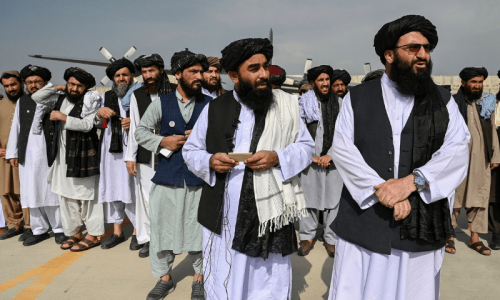
As a military operation, the invasion of Afghanistan was remarkably successful and drove the Taliban from power by December 2001. But Schroen’s main targets such as Bin Laden, Zawahiri and other senior Al-Qaeda figures escaped, while the Taliban regrouped and fought a long guerrilla war that culminated in the chaotic US withdrawal from Kabul last year.
In interviews later in his life, Schroen said the failure of the US to secure Afghanistan and capture its main enemies there was, in large part, due to a drain on both CIA and military resources caused by the 2003 invasion of Iraq.
Despite initial claims from the US administration of George W Bush that the Iraqi government was somehow connected to the 9/11 attacks, Schroen said he never believed in any linkage.
“The number of guys, CIA personnel, out in these little remote camps and bases were reduced in number…because of demand to staff up the Iraq effort,” he told NPR in 2005. “It really did cost us, I think, a lot in momentum.”
Published in Dawn, August 7th, 2022