OPEC+ approves tiny oil output rise in rebuff to Biden

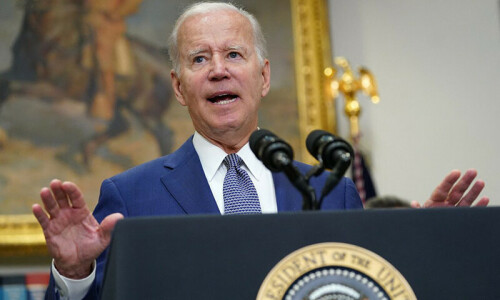
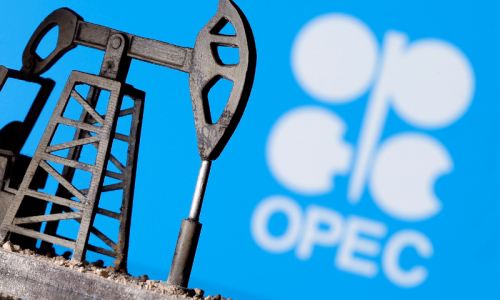
OPEC+ is set to raise its oil output goal by 100,000 barrels per day, an amount analysts said was an insult to US President Joe Biden after his trip to Saudi Arabia to ask the producer group’s leader to pump more to help the United States and the global economy.
The increase, equivalent to 86 seconds of daily global oil demand, follows weeks of speculation that Biden’s trip to the Middle East and Washington’s clearance of missile defence system sales to Riyadh and the United Arab Emirates will bring more oil to the world market.
“That is so little as to be meaningless. From a physical standpoint, it is a marginal blip. As a political gesture, it is almost insulting,” said Raad Alkadiri, managing director for energy, climate, and sustainability at Eurasia Group.
The increase of 100,000 bpd will be one of the smallest since OPEC quotas were introduced in 1982, OPEC data shows.
The Organisation of the Petroleum Exporting Countries and its allies, led by Russia, a group known as OPEC+ that formed in 2017, had been increasing production by about 430,000-650,000 bpd a month, as they unwound record supply cuts introduced when pandemic lockdowns choked off demand.
They had, however, struggled to meet full targets as most members have exhausted their output potential following years of under-investment in new capacity.
Combined with disruption linked to Russia’s invasion of Ukraine in February, the lack of spare supply has driven up energy markets and spurred inflation.
Repairing ties
With US inflation around 40-year highs and Biden’s approval ratings under threat unless gasoline prices fall, the president travelled to Riyadh last month to mend ties with Saudi Arabia, which collapsed after the murder of journalist Jamal Khashoggi four years ago.
Saudi de-facto ruler, Crown Prince Mohammed bin Salman, whom Western intelligence accused of being behind the Khashoggi murder — which he denies — also travelled to France last month as part of efforts to rebuild ties with the West.
On Tuesday, Washington approved $5.3 billion worth of defensive missile system sales to the UAE and Saudi Arabia but it has yet to roll back its ban on offensive weapon sales to Riyadh.
OPEC+, which will next meet on Sept. 5, said in a statement that limited spare capacity requires it to be used with great caution in response to severe supply disruptions.
It also said a chronic lack of investment in the oil sector will impact adequate supply to meet growing demand beyond 2023.
Sources within OPEC+, speaking on condition of anonymity, also cited a need for cooperation with Russia as part of the wider OPEC+ group.
“(This decision) is to calm down the United States. And not too big that it upsets Russia,” said an OPEC+ source.
Benchmark Brent oil futures LCOc1 jumped by around $2 per barrel after OPEC’s decision to trade close to $101 per barrel. O/R
Shortly after Russia’s invasion of Ukraine, which Moscow terms a “special military operation”, oil prices rose to their highest in 14 years.
By September, OPEC+ was meant to have wound down all of the record production cuts it implemented in 2020 in response to the impact of the pandemic.
But by June, OPEC+ production was almost 3 million barrels per day below its quotas as sanctions on some members and low investment by others crippled its ability to boost output.
Only Saudi Arabia and the UAE are believed to have some spare capacity.
French President Emmanuel Macron has said he had been told that Saudi Arabia and the UAE had very limited ability to increase oil production.