PM directs cheaper energy for textile industry

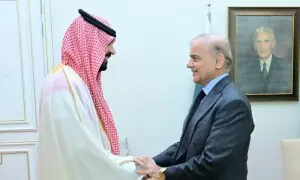
LAHORE: Prime Minister Shehbaz Sharif on Monday directed the relevant ministers to immediately have a detailed meeting with the representatives of textile industry and come up with a solution till Wednesday (tomorrow) regarding finalisation of a competitive gas and electricity tariff for the export sector and restoration of gas to the captive power-run industry.
The PM also directed the authorities concerned to review the loadshedding policy of gas supply for the factories solely dependent on the commodity for their functioning.
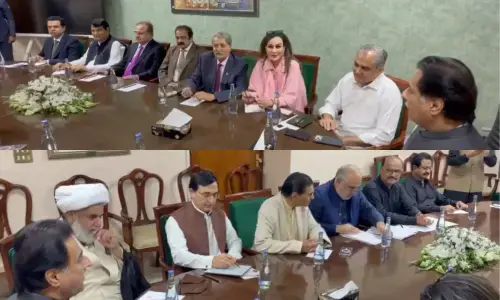
Chairing a review meeting for the promotion of investment-related industries and the export sector, PM Sharif said country’s economic stability was linked to addressing the problems faced by the industrial sector.
The premier said that by extending every possible facilitation to industries, the country would be better able to present its products in the international market.
Loadshedding for gas-run units to be reviewed
He directed the authorities to review the gas loadshedding schedule and policy for the factories that entirely relied on gas for their functioning. He also asked the ministers to hold meetings with the businessmen’s delegation to resolve their issues.
During the meeting, All Pakistan Textile Mills Association (Aptma) representatives briefed the PM about continued growth in textile exports and problems that are hampering the sector’s further growth.
The Aptma delegation informed the PM that textile exports climbed to the so-far highest figure of $19.35 billion during FY22, which is 43 per cent, 26pc and 90pc higher than the FYs 2018, 2021, and 2010, respectively.
In June alone, the country recorded $1.7bn in textile exports. PM Sharif was briefed that the zero-rated export industries, including textiles, used to have a competitive gas and electricity tariff ($6.5 per mmBtu of gas and 9 cents per kW of electricity) annually under a policy that ended on June 30. Due to this, the delegation said the industry is in the dark about the next policy of the government on tariffs.
The Aptma delegation also requested the premier to go for a straight five-year textile policy regarding a subsidised and regionally competitive gas and electricity tariff for the export sector.
Published in Dawn, July 5th, 2022