

ISLAMABAD: A former chairman of the Board of Investment (BoI) and member of Imran Khan’s cabinet claimed on Monday that Saudi Crown Prince Mohammed bin Salman, popularly known as MbS, wanted to invest $20 billion in Pakistan with a condition that the investment should be insulated from political and bureaucratic elite.
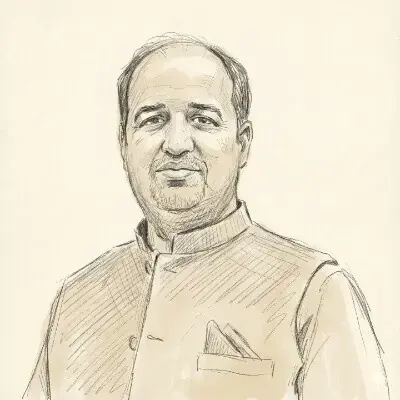
Haroon Sharif further claimed that during their meeting in 2019, MbS took him aside and said the Saudi government was committing $20bn in investment to Pakistan, but “unless you insulate it from politics and bureaucracy this will not happen”, he quoted the crown prince as saying.
Mr Haroon, who served as the BoI chairman during the PTI government, made these remarks while speaking at a Grand National Dialogue on ‘Unlocking Pakistan’s Economic Potential’, organised by the Islamabad Policy Research Institute.
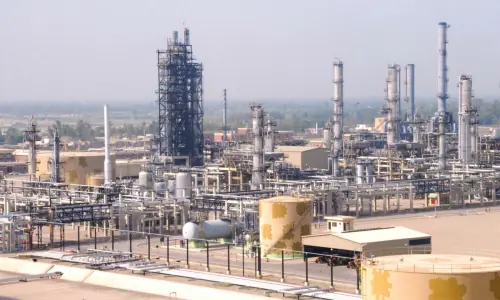
During his visit in 2019, MbS had pledged $20bn worth of investment in Pakistan to provide relief to the latter’s struggling economy. According to the plan, the Kingdom intended to set up infrastructure, including an oil refinery. However, the said investment had not materialised yet.
Ex-BoI chairman claims Saudi crown prince expressed interest in investment during 2019 visit
Mr Sharif articulately made a case as to what was needed to ‘rise from the ashes’, and remarked that economies grew when the investment-to-GDP ratio rose, which he said was missing in the case of Pakistan. He said the future of world finance was in Asia, rather than Europe, mentioning the sovereign funds of Qatar, the UAE, Kazakhstan and China worth hundreds of billions of dollars, and advised that they needed to be tapped.
Speaking on the occasion, federal Minister for Planning and Development and Special Initiatives Ahsan Iqbal said Pakistan needed a long-term sustainable policy plan of action, one that should not be interrupted owing to political considerations. He said no investment could be sought “until and unless we put our house in order, and that necessitates a consistent policy backed by all the stakeholders”.
He regretted that the China-Pakistan Economic Corridor couldn’t take off in Pakistan to this day allegedly owing to political instability, unsatisfactory law and order situation and a trust deficit of sorts between various poles of power.
The minister observed that the 2022-23 fiscal budget was a nightmare and there were hardly any funds to carry out the business of the state as well as development. He added that borrowing was needed to meet day-to-day expenses, which was detrimental to progress.
He pointed out that Pakistan’s Foreign Direct Investment was barely $1.5bn, whereas there was a ‘cash treasure’ floating around in the Asian markets soliciting competitive economies.
Mr Iqbal remarked that Pakistan had fallen behind in progress over the last 25 years, and there was a need for “some deep introspection for this failure”. He called for a national consensus on the economy, and invited stakeholders from across the board to huddle together for bailing it out and rebuilding a sovereign economic edifice.
Centre for Aerospace and Security Studies Director Dr Usman Chohan said with 10 per cent tax collections, financial stability would always remain a challenge for Pakistan.
Maha Rehman from the Lahore University of Management Sciences (Lums) believed the deeper issue was about incentive alignment human capital and protection from extractive, rent-seeking elements. Pakistan went from having one of the highest GDPs per capita in South Asia to being at the bottom of the table in four decades.
Adjunct Professor at Lums, Dr Ikramul Haq, spoke about the trial and error story of the taxation system in Pakistan. SDPI Executive Director Dr Abid Suleri called for the formation of an Economic Security Council.
Published in Dawn, June 21st, 2022