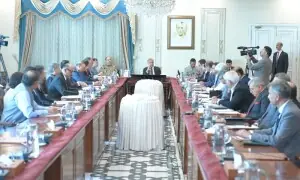
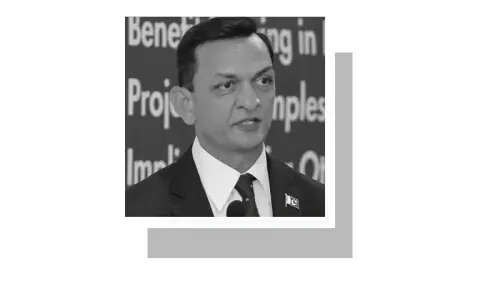
THOUGH there is great potential in the Pakistan-Iran relationship, geopolitical complications, particularly since the events of 1979, have prevented ties from maturing to a higher level. However, if there is sustained commitment from both sides to improve relations, the present positive rhetoric can be translated into more robust political and economic ties. Foreign Minister Bilawal Bhutto-Zardari, during his recent two-day trip to Iran, renewed Pakistan’s commitment to improving ties with Tehran, as he met his counterpart as well as the Iranian president. As Mr Bhutto-Zardari told the media, building “close relations” with Iran was a “high priority” for the prime minister as well as himself. Discussions in Tehran revolved around trade, investment, facilitating pilgrims as well as cultural and educational exchanges. Barter trade, border markets and import of electricity from Iran were specifically discussed.
But before ties can move beyond pleasantries, the irritants standing in the way of improved relations need to be frankly discussed and resolved at the diplomatic level. Iran’s closeness to India, and Pakistan’s warm relations with Saudi Arabia, are obstacles that prevent further cementing of bilateral ties. Still, these impediments can be overcome, as long as both sides commit to the principle that they will not let good relations with each other’s perceived foes stand in the way of better bilateral ties. Moreover, non-state actors active in both countries often stage cross-border attacks, particularly in far-flung areas. There must be a commitment, therefore, not to allow each country’s soil to be used against the other, while greater collaboration between both nations’ security agencies can minimise the damage militants can do to ties. And in these times of spiralling energy prices, Pakistan should make all-out efforts to purchase Iranian oil and gas at competitive rates. While Iran has completed its side of the Iran-Pakistan gas pipeline, Pakistan has yet to complete work on its end. The foreign minister mentioned the project during his Iran visit. Of course, the major stumbling block in importing Iranian oil and gas is US sanctions. That is one of the major reasons work on the pipeline remains stalled. However, Pakistan needs to secure waivers from the US, just as Washington has not stopped India from importing Russian oil despite sanctions. If the sanctions can be overcome, Pakistan can also ramp up exports to Iran, particularly of rice and agricultural products. Improved trade — and mutual trust — can be the keys to better bilateral ties.
Published in Dawn, June 17th, 2022