0
0

IT is a general perception, albeit flawed, that religious-minded Muslims and especially Muslim scholars are against women’s rights. They do not support the idea of women’s education, many say.
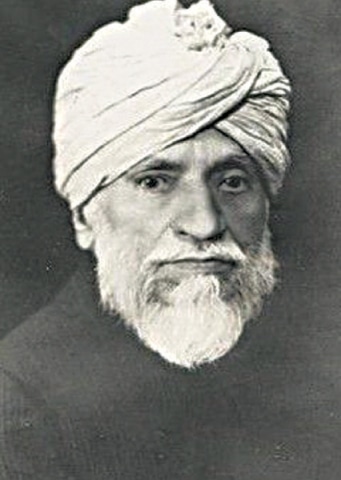
The fact is Muslim scholars have always been in favour of educating women and have advocated giving them the rights that Islam has given them. But at the hands of Muslims, some of these Muslim scholars have suffered much for supporting women’s rights and favouring female education. Moulvi Syed Mumtaz Ali was one such person. He launched an Urdu magazine for women and made Muhammadi Begum, his wife, its editor. It was the year 1898. And modern trolling techniques used by social media zealots today were not available in good old days, but postal services were very much in place in British India and Mumtaz Ali regularly received hate mail, threats and curses.
The magazine was named Tehzeeb-e-Niswan (also written as Tehzeeb-un-Niswan at masthead, but was generally called Tehzeeb-e-Niswan). As the name suggests, the magazine intended to reform the women, but Moulvi Mumtaz Ali’s fellow Muslims disagreed and many of them felt he was bent upon “misleading” innocent Muslim women.
Interestingly, Mumtaz Ali had consulted Sir Syed Ahmed Khan before naming his periodical and Sir Syed, while suggesting a title among a few ones sent to him, wrote back angrily that he was not in favour of launching a journal for women in the first place. Sir Syed, one of the most revered modernists and reformers, was not in favour of women’s education. But Mumtaz Ali was determined and Tehzeeb-e-Niswan, a monthly, was launched from Lahore in 1898. It became the first-ever magazine in the subcontinent to have had a woman as its editor. Though Tehzeeb-e-Niswan was not Urdu’s first periodical published exclusively for women, such earlier magazines had no female staffers and editors were male.
Before Moulvi Mumtaz Ali, Urdu literature had seen a couple of feminist writers: Moulvi Nazeer Ahmed Dehlvi and Altaf Husain Hali. Nazeer Ahmed, a madressah-educated scholar of Islam and Arabic, was a zealous supporter of women’s education and wrote Mirat-ul-Aroos, an Urdu novel, in 1869, with intention of educating women, especially his daughters.
Although his view of the sphere of activities for women was rather narrow and the basic theme of the novel was didactic, it was a great leap forward. Hali, also educated in traditional system and a scholar of Arabic and Persian, wrote quite a few poems celebrating women and their sacrifices, pointing to hardships women had to go through in subcontinent’s society.
But Moulvi Mumtaz Ali was many steps ahead, in fact way ahead of his times. Tehzeeb-e-Niswan published articles not only on housekeeping or how to bring up decent children, but also encouraged creative writings by women. Informing women of their legal rights as permitted by Islam was another remarkable aspect of the magazine. Mumtaz Ali launched another Urdu journal for women and named it Musheer-e-Madar (Mother’s advisor) in 1905. His book Huqooq-e-Niswan (1898) explains what legal rights a woman has in Islam. His magazine for children Phool proved to be a landmark in history of Urdu’s juvenile literature.
Moulvi Syed Mumtaz Ali was born in 1860 in Deoband, UP, British India. He was educated at Deoband madressah and, later on, at Lahore’s government school since his father, Zulfiqar Ali, was in government service and was transferred to Punjab. In those days, Christian missionaries and Muslim scholars used to debate religious issues on Lahore’s roads and alleys. Soon, Arya Samaj, a Hindu reformist movement, joined the fray.
Mumtaz Ali was keenly interested in these debates and felt Muslim scholars lacked deep knowledge. So he began reading “munazraati” (relating to religious debates) literature. Someone asked him to write to Sir Syed Ahmed Khan for modern religious knowledge. Young Mumtaz wrote to the great man.
Despite his extremely busy schedule, Sir Syed asked him to come over and discuss the issues that were bothering him. Mumtaz Ali was satisfied after discussions with Sir Syed. Meanwhile Mumtaz Ali landed a job as a translator at Lahore High Court. All this — Deoband, modern education, religious debates, legal matters and Sir Syed’s modernist and reformist agenda — shaped his world view and played a vital role in his course of action in future. Though Mumtaz Ali could not complete his education and could not pass his exams — either from Deoband or his BA exams — he paved the way for women’s education as well as journalism catering exclusively to women. Through his publishing house is Lahore, named Dar-ul-Isha’at Punjab, he published many books valued for their content and language.
Moulvi Syed Mumtz Ali died in Lahore on June 15, 1935.
Published in Dawn, June 13th, 2022