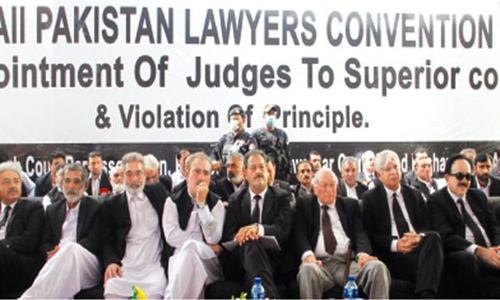
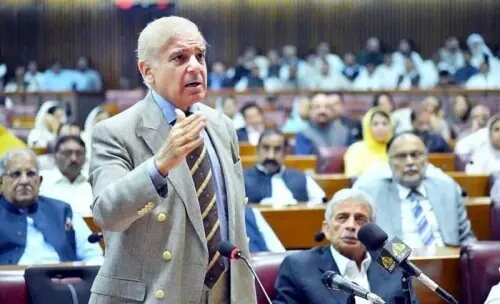
ISLAMABAD: The resentment Sindh Bar Council (SBC) representatives have expressed over the proposed elevation of judges in the province’s high court has again highlighted the long overdue demand of lawyers for developing lawyers appointment criteria.
An SBC delegation, headed by its vice chairman Zulfikar Ali Khan Jalbani, met Chief Justice of Pakistan (CJP) Umar Ata Bandial in Karachi on Friday to express their dissatisfaction with the proposed list comprising seven candidates to be elevated in the Sindh High Court (SHC) as judges without consultation with bar representatives.
A source told Dawn the names of seven individuals, to be elevated as high court judges, were proposed against a perceived understanding that SHC Chief Justice Ahmed Ali Sheikh might accord his consent over his appointment as a judge of the Federal Shariat Court (FSC).
In August last year, Justice Sheikh declined to be appointed as an ad hoc judge of the Supreme Court after the Judicial Commission of Pakistan (JCP) approved his nomination as an ad hoc judge of the apex court for one year, provided he agreed.
Even President Dr Arif Alvi approved Justice Sheikh’s appointment as an ad hoc judge of the Supreme Court, requiring him to attend apex court sittings for a year with effect from the date he took the oath of office. However, Justice Sheikh ultimately refused.
In the Friday meeting, the SBC delegation also highlighted the need to replace the SHC chief justice, who they said had the most extended stay in history as he joined the Sindh High Court in 2009 and became its chief justice in 2017.
The delegation also complained about the short temperament of some sitting judges besides expressing reservations over the appointment of retired judges or judicial officers as judges of the special courts and tribunals.
On March 9, the CJP Bandial presided over a meeting of the JCP rules committee and emphasised that objectivity should be maintained in appointing judges. He also stressed the need for developing straightforward criteria to assess, evaluate and then select judges for high courts and the Supreme Court.
Published in Dawn, May 22nd, 2022