1
1

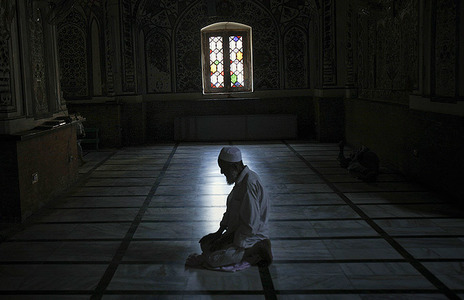
WASHINGTON: The fasting ended in the US on Sunday night, marking the first post-Covid Ramazan when America’s Muslim community resumed its social engagements.
The Khatm-i-Quran ceremony at Adam’s Islamic Centre, Virginia’s largest, brought 1,000 to 1,500 worshippers and guests. And the centre provided iftar and dinner to all.
The Diyanet Center in Lanham, Maryland, has America’s largest mosque and perhaps the most beautiful too.
Unlike most mosques of the South Asian community, this Turkish-funded mosque has a proper dining room, rather rooms, with dining tables and Turkish sofas. The food is Turkish, complete with desserts and Turkish tea.
Iranian mosques are smaller but impress visitors with their tiles and cleanliness.
African-American Imam led prayers at Iftar hosted by Pakistan Embassy
African-American Muslims also have large mosques and their interactions with the South Asia community have influenced their culinary preferences too. They often serve South Asian foods at their iftars and dinners.
According to the US Department of State, the largest ethnic groups of American Muslims are those of South Asian, Arab and African-American descent.
So, it was no surprise that an African-American Imam led the prayers at the Interfaith Iftar dinner at the Pakistan Embassy.
“Prayers for peace, harmony, compassion and tolerance from representatives of major faiths at the interfaith Iftar,” noted Hannah Bloch, an editor at National Public Radio. Ms Bloch, who has served in Pakistan as a correspondent for the Time magazine, also enjoyed the traditional Pakistani food the embassy provided.
Masood Khan, Pakistan’s Ambassador to the United States, underlined the need for promoting the spirit of religious freedom and inter-faith harmony. “Ours is a pluralist society and we promote respect for diversity,” he said.
Like previous years, members of the Muslim, Christian, Jewish, Hindu, Sikh and Buddhist faiths participated in the event and spoke.
State Department officials, National Security Council officers, Congressional staff, members of US think tanks and prominent Pakistani Americans also attended the dinner.
At the entrance, the embassy displayed paintings and pictures of temples, churches and Gurdwara in Pakistan. Pakistani Sikhs, Hindus and Christians also came.
Next to those pictures was one of the oldest portraits of the nation’s founder in a western suit, not in Sherwani, as promoted by the Zia regime.
The keynote speaker, US Ambassador at-large for International Religious Freedom Rashad Hussain noted that fasting, practiced in all religions in one form or the other, promotes sacrifice,
discipline, fortitude and empathy with the poor.
“Ramazan is a great equaliser. Rich and poor, privileged and underprivileged all experience hunger and thirst and together strive for physical and spiritual cleansing,” he said.
Ambassador Hussain lauded Muhammad Ali Jinnah’s vision for religious freedom, protection of rights of all minorities and a polity based on the tenets of equality and tolerance for all.
The famous anthropologist and a renowned author, Dr Akbar S. Ahmad cited the Prophet’s (PBUH) last letter written to the Monks of Mount Sinai which had affirmed protection of the rights of the minorities especially Christians in a Muslim state.
Father Dan Rooney, Dr Talib M. Shareef, Rabbi Lustig, Bhante Upartana, Ms Lee Bachu, Mr Jasvinder Singh highlighted the themes of peace, religious harmony and respect for human rights.
Interfaith Iftar dinner is a yearly feature at the Pakistan Embassy which is commended by followers of all religions.
It is, perhaps, the only diplomatic event in Washington which brings forth a spirit of universality and harmony among followers of diverse faiths.
Published in Dawn, May 2nd, 2022