1
1

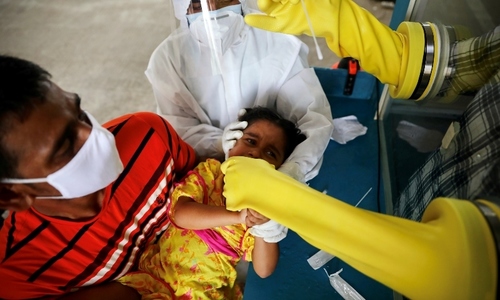
ISLAMABAD: Nearly 90 million people in Asia-Pacific region are likely to have been pushed into extreme poverty, and over 150m and 170m live on less than $3.20 and $5.50 a day, respectively, due to the pandemic’s adverse impacts on livelihoods — by way of falling incomes, remittances and consumption, says a new report released two years after Covid-19 that began spreading around the world.
The report, “Building Forward Together: Towards an Inclusive and Resilient Asia and the Pacific”, jointly released on Monday by the Asian Development Bank, UN Development Programme and the Economic and Social Commission for Asia and the Pacific (UN-ESCAP), says the crisis has also widened and depended existing inequalities within and between countries.
To estimate the impact of Covid-19 on poverty and inequality, the World Bank, together with national statistics offices, conducted on phone surveys in 34 countries worldwide.
All six countries in the sample from Asia and the Pacific reported higher income losses for the bottom 40 per cent than for the top 60pc of the population at the national level and in rural areas.
On average, Covid-19 induced extreme poverty in the 34 countries is estimated to have increased by 0.9 percentage points and income inequality, as measured by Gini coefficient, is estimated to have climbed 0.3 percentage points.
The report says the situation is even bleaker when indicators of multidimensional poverty are considered. At the global level, UNDP estimates that the impact of the pandemic on health, education and income will be equivalent to a loss of six years of gains in the Human Development Index, and may set poverty levels back nine years with an additional 490m people falling into multidimensional poor currently living in Asia and the Pacific.
With about half of the world’s 1.3 billion multidimensional poor currently living in Asia and the Pacific, it is estimated that the region will account for around 245m of the new multidimensional poor.
Millions of them are children for whom falling into poverty often comes with lifelong adverse consequences for their development and opportunities.
In many countries across Asia and the Pacific, income inequality is high and in some inequality keeps rising. The fragmentation of the population by income levels differs greatly across the countries of the region.
A significant share of the population lives in extreme poverty with income below $1.90 per day in several developing countries.
In developed countries of the region, more than 80pc of people have an income of more than $20 a day. Covid-19 has left a legacy of increased inequality.
Published in Dawn, March 29th, 2022