You’re among friends

AS a young law student in a far-off land, between academia and expectations, optimism and setbacks, I’d often find myself missing home. Some days there’d be a quick fix. Others, even the nicest Pakistani restaurant couldn’t quite fill the void. In the latter, a long walk would be made to a familiar destination.
On entering Foyles’ bookstore on Charing Cross road, the first thing you see is an inscription covering the front wall. Big, bold letters proclaiming- ‘Welcome book lover, you’re among friends’. A short walk to the back of the store led me right to them — Mohammed Hanif, Kamila Shamsie, Mohsin Hamid, Daniyal Mueenuddin.
Pakistani authors I’d read since I was a child. A little island of familiarity in the ocean of the unknown that was London to an 18-year-old. And in the freedom to spend as much time as I liked diving into the literature of my homeland, I found assurance that the world was smaller than I thought. Where thousands of miles separated people, words could connect them. Time flew by, it wouldn’t slow down, and soon, I’d be home again.
Now that I am, I work with colleagues to whom this is a far-off land too. Young lawyers from Quetta to Vehari, Swabi to Multan. And I wonder — do they get any similar assurances? I walked into a bookstore in Islamabad the other day and found every item wrapped in single-use plastic, so you can’t read a word until you pay up. Clearly someone wanted to kill the planet, punish the poor, and break a heart in a single move.
Don’t throw the writers, the poets, the dreamers to the wolves.
But even beneath the plastic, empathy wasn’t the only thing missing. Barring a few exceptions, I could have sworn the locally written books were the same ones I’d seen since my childhood. At best the steady stream of new Pakistani literature had been reduced to a light trickle, increasingly dominated by diaspora authors published from abroad. And in this notable absence was a glaring truth — either we as a country don’t have much to say, or somebody isn’t letting us say it.
Refusal to believe the former led to a discovery: the growing Pakistani literature scene hadn’t stumbled over itself, or died a slow, natural death. It was murdered. See, prior to August 2019, it was almost entirely reliant on trade with India, where major international publishers were based, to supply to all of South Asia. When we halted such trade, it cut off the Pakistani author’s access to a publisher, and by extension, to the eyes of the world. Inability to import led prices to skyrocket, spurring a pirated book trade that diminishes whatever’s left of an author’s earnings.
If this sounds like shooting oneself in the foot, it’s because it is. A unilateral step to try and spite our problematic neighbour led to little loss for them, and the crippling of an artistic industry for us. An untold number of authors buried before their work could see the light of day. Still, some managed to persist. I spoke to the author of two award-winning novels, Awais Khan, who emphasised that literature knows no barriers; if exemptions to the trade ban could be made to save the pharmaceutical industry, why couldn’t the same be done for books?
If the moral and artistic reasons for breathing life into Pakistani publishing aren’t enough to convince you, there are others equally born in pragmatism. We hear much in this country about the power of narrative, and how it can win wars before a single bullet is fired. But when we respond to fifth-generation warfare with songs, films and dramas aimed towards our own people, it raises the question: who exactly are we trying to convince? At this point I promise you; the regular Lahori is aware of the plight of the Kashmiri people. They’d fight for them, die for them. But the sentiment might be more helpful when shared in the streets of Delhi.
Opening the book trade would allow for Pakistani voices to be heard by those against whom we ought to carry no animosity — the people of India. Those who hold no role in the suffering of Kashmir but do hold the potential to be heard when they speak out about it. When you’re on the right side of history, you don’t fear information. And if you want your ideas to carry the weight of authenticity, you let them flow freely. It’s no coincidence that India’s loudest voice in favour of Kashmir is Arundhati Roy, a novelist.
I find it perfectly in line with patriotism to desire the free flow of books while simultaneously condemning the Hindutva ideology that led us to take a step back from our neighbour. But this isn’t about politics; it’s about people. If you can find another way to accomplish the same goal, wonderful. Just don’t throw the writers, the poets, the dreamers of Pakistan to the wolves.
This country exists because a poet had a dream. If we can’t uplift the dreamers of today, the least we can do is stop holding them back. To send a message that their work is valued. To let them know, they’re among friends.
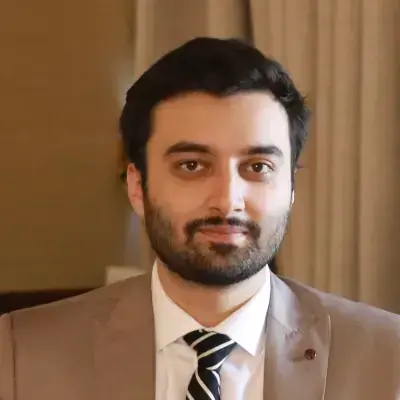
The writer is a lawyer and columnist from Okara. He works at the Supreme Court of Pakistan.
Twitter: @hkwattoo1
Published in Dawn, March 6th, 2022