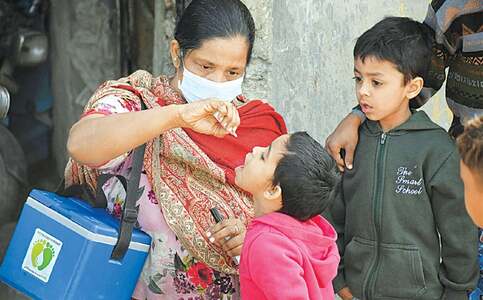
JOHANNESBURG: The World Health Organisation (WHO) said authorities in Malawi have detected a case of polio in the southern African country’s capital, another setback in continuing efforts to eradicate the highly infectious paralytic disease globally.
In a statement on Friday, the UN health agency said officials had identified wild poliovirus disease in a young child in Lilongwe, the first time the wild virus has been detected on the African continent in five years.
Lab tests show virus detected is connected to strain spreading in Pakistan
Although polio has been spreading in numerous African countries in recent years, those outbreaks were linked to viruses originally contained in vaccines, not to the wild virus. In very rare instances, the live virus in the oral polio vaccine can mutate into a version capable of causing epidemics, particularly in populations that haven’t been immunised.
WHO said lab tests showed the polio virus detected in Malawi is connected to the strain that has been spreading in Pakistan’s Sindh province, where the disease remains entrenched.
As long as wild polio exists anywhere in the world all countries remain at risk of importation of the virus, said Dr Matshidiso Moeti, the World Health Organisation’s Africa chief.
Polio spreads mostly from person to person or through contaminated water. It attacks the nervous system and can sometimes paralyse people within hours. The disease mostly affects children under five and has been largely wiped out in rich countries.
Health officials say polio is endemic in Afghanistan and Pakistan, although numerous countries in Africa, the Middle East and Asia have also reported cases in recent years.
WHO and its partners have struggled for decades to eradicate polio their initial deadline was to wipe out the disease by 2000 but they have since missed multiple targets to eliminate it. Many control efforts were suspended during the pandemic, allowing the disease to spread further in what some officials warned could be a devastating setback for eradication plans.
Published in Dawn, February 19th, 2022