0
0

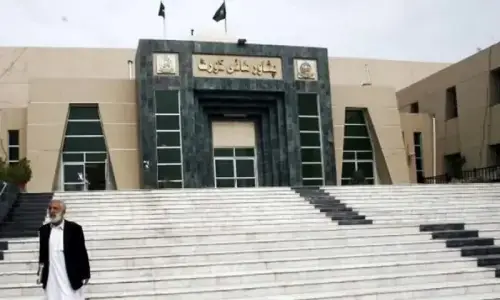
PESHAWAR: The Peshawar High Court on Thursday sought response of the local government secretary and other officials on a petition seeking orders for the relevant government departments to implement the Khyber Pakhtunkhwa Model Building Bylaws, 2017, especially for the provision of facilities in commercial buildings to persons with disabilities, and women.
A bench consisting of Justice Musarrat Hilali and Justice Ijaz Anwar issued notices to the respondents, including the secretary, directors general of Peshawar Development Authority and Environmental Protection Agency, Peshawar’s deputy commissioner, Peshawar Cantonment Board’s chief executive officer, and Peshawar’s chief traffic officer, asking them to respond to the petition on the next hearing.
Petitioner Mohammad Furqan Qazi requested the court to declare the non-implementation of bylaws in numerous commercial buildings an ‘illegal’ act.
He prayed the court to direct the respondents to strictly implement the laws related to buildings, especially the bylaws, which declared that facilities like public toilets for men, women and persons with disabilities, parking, ramp for PWDs, proper ventilation system, elevators, and emergency exits were necessary for buildings.
The petitioner also sought orders for an immediate halt to work on commercial and residential buildings, educational institutions and hospitals, which are in contravention with the bylaws and international standards.
The petitioner’s lawyer, Saifullah Muhib Kakakhel, requested the bench to direct the respondents to conduct a survey of the buildings, which violated bylaws.
He contended that commercial units in Peshawar were not constructed according to international standards as well as the Model Building Bylaws, 2017.
The counsel argued that according to the bylaws, each commercial unit should have five urinals each for 100 men and 100 women and one washbasin for 20 persons, while for persons with disabilities, one out of two lavatories should be there in commercial buildings with a grab bars of the minimum width of six feet.
He added that a lack of public toilets in commercial units and public places led to several health issues to the people.
Mr Kakakhel said that there were mostly no toilets for women in markets due to which their intake of water was almost nil, which caused dehydration and other health problems.
He said that most commercial buildings didn’t have ramps for PWDs and thus, adversely affecting their mobility on the premises. The counsel said that plazas and other commercial places drew monetary benefits from customers but didn’t provide them with appropriate facilities.
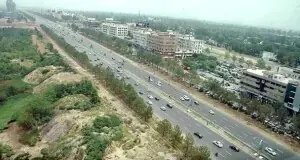
He also said that due to a lack of parking facilities, the people parked vehicles near shops on the main roads causing traffic congestion on the University Road, one of the major arteries of the provincial capital.
Published in Dawn, February 18th, 2022