World Bank seeks ‘actions’ for 2nd phase of loan plan



ISLAMABAD: The World Bank has sought at least four crucial ‘prior actions’ for the second phase of a multi-million dollar loan programme to advance the reform process – Resilient Institutions Strengthening Programme (RISE-II).
The key prior actions would require the authorities to ensure harmonisation of General Sales Tax (GST) among the federal and provincial governments, control rising debt burden through amendments to the Fiscal Responsibility & Debt Limitation Act 2005, bring uniformity in provincial property valuations for tax purposes and ensure complete clearance of GST refunds.
RISE-II is an extension of an earlier programme approved in 2019 and is meant to support measures to enhance the country’s fiscal position and promote competitiveness and growth through harmonisation of the GST, increased use of digital financial services, and enhanced integrity in the financial sector.
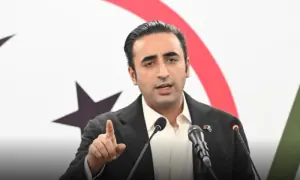
Finance Minister Shaukat Tarin and World Bank’s Country Director Najy Benhassine and his team had a meeting at the Ministry of Finance to deliberate on these prior actions.
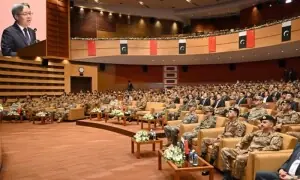
The meeting reviewed the progress on the ongoing World Bank’s projects and programmes in Pakistan. “The meeting also focused on RISE-II and discussed some prior actions to be met for the timely completion of the programme,” an official statement said.
The GST harmonisation has been part of the medium-term tax policy supported and funded by the IMF and the World Bank since 2019 with limited success. Under the revived IMF programme last week, the government has committed to the establishment of a single filing portal to support GST harmonisation to remove filing with five different tax administrations (four provinces and the centre) and simplify with a single tax base. This is considered critical to improve the ease of doing business and enhance the trust of taxpayers.
Under the current system, the sales tax base is fragmented, with services subject to provincial taxation and goods under federal government taxation. The fragmentation of the tax base has severely compromised tax policy design and administration, generated disagreements over tax base definition and crediting, caused cascading and double taxation for businesses, and significantly increased compliance costs. “Indeed, the system is cumbersome and harms competitiveness by increasing the cost of doing business,” the government concedes.
The government has already introduced in the national assembly a bill to amend the Fiscal Responsibility and Debt Limitation Act of 2005 that seeks to limit the stock of government guarantees at 10pc of GDP and strengthen the Public Debt Office to plan acquiring debt and liabilities but with a reporting downgrade. The bill was on the agenda of the national assembly’s standing committee on finance on Tuesday but was deferred due to a paucity of time.
The proposed law generally seeks to achieve three key objectives: limit the stock of government guarantees at 10pc of GDP; publish a Medium-Term National Macro-Fiscal Framework (MTMFF); and institutionalise debt management functions in a single office reporting to the finance secretary instead of the finance minister. The draft act also seeks to increase the number of directors in the Debt Policy Coordination Office (DPCO) from three to four and change its nomenclature to Debt Management Office (DMO).
Interestingly, the draft bill seeks to have an upper limit on total public debt and guarantees at 70pc of GDP with the addition of 10pc limit on the stock of guarantees. There is no change in the upper limit for the stock of public debt at 60pc of GDP as envisaged in the 2005 act.
An official statement said Mr Tarin appreciated the World Bank for being a source of support in pursuing reform agenda and implementing various development projects for the country.
Published in Dawn, February 9th, 2022