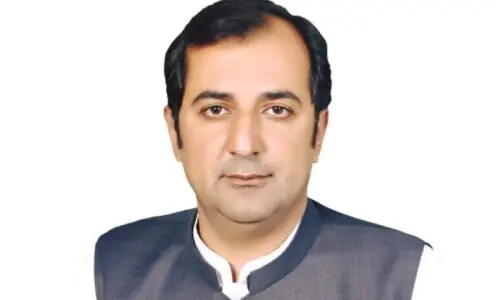
PESHAWAR: Federal Minister for Food Security and Research Syed Fakhar Imam on Thursday said the use of latest technology in agriculture research was imperative to achieve self-sufficiency in food services.
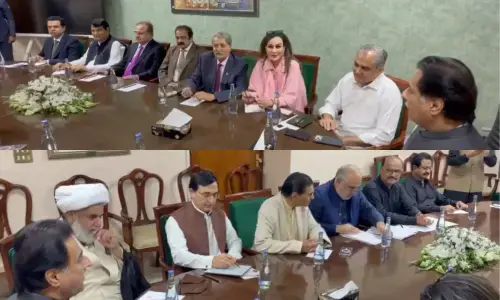
Talking to media persons at the Agriculture Research Institute (ARI) Tarnab ahead of a briefing on Prime Minister’s National Agriculture Emergency Programme (PMNAEP) and the Agriculture Transformation Plan (ATP), the minister said that China had made rapid progress because of the use of modern technology. “Pakistan has the potential to achieve new heights of economic development and food security by using latest techniques, innovations, mechanisation and modern technology especially in agriculture and livestock sectors to earn maximum capital,” he said.
“The country needs quality scientists and new researches in agricultural development. Great responsibilities rest on our scientists and PhD scholars of agriculture universities and colleges to prepare students for modern day challenges,” the minister added.
Mr Imam said he had invited Chinese agricultural scientists to visit the country’s agriculture educational and research institutes to deliver lectures so that the students and young scholars could get more knowledge from their rich experiences.
Asked about Khyber Pakhtunkhwa’s share in the ATP, the minister said that special projects were launched for increasing value addition of corps, fruits, vegetables, livestock and fisheries besides promoting floriculture.
The minister said US, Brazil and Argentina were leading exporters of edible oil. China and India’s soyabean production has touched 240 million tonnes while Pakistan despite having great potential was spending huge amount on its imports, he noted.
He termed it welcoming that the soyabean was being cultivated on about 1,500 to 2,000 acres areas in KP. He further said that 40,000 tonnes of flour was being provided in the markets across the country per day including 6,000-7,000 tonnes in KP.
Published in Dawn, February 4th, 2022