ISLAMABAD: Uncertainty in domestic politics and regional situation is constraining Pakistan’s policy options as the national leadership navigates choppy waters of politics, economy and security.
This was the conclusion of the annual report, ‘Pakistan Outlook 2022 — Politics, Economy and Security’ published by Islamabad Policy Institute (IPI).
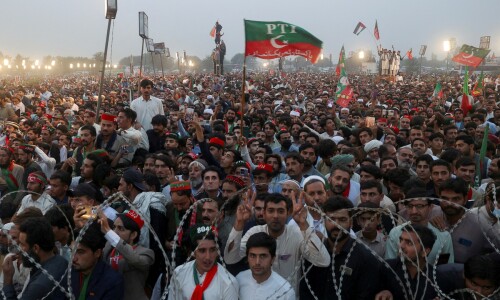
In the report, 2022 has been described as the defining year because of the impending change in the military command and it being Pakistan Tehreek-i-Insaf (PTI)-led government’s last full year in office in the current tenure.
The report has assessed Pakistan’s performance in key areas during 2021, analysed emerging trends and projected likely direction in 2022 while looking at potential challenges complicating the policy landscape.
IPI calls 2022 defining year due to impending change in military command, PTI govt’s last full year
The report provides an in-depth analysis and outlook for 2022 on pressing issues in diverse subjects such as the strategic environment, foreign policy, internal security, domestic politics, economy, public health and energy.
Experts, including former foreign secretary Salman Bashir, ex-defence secretary retired Lt Gen Asif Yasin Malik, vice chancellor University of Health Sciences Dr Javed Akram, former member Oil and Gas Regulatory Authority (Ogra) Dr Ilyas Fazil, power sector expert Arooj Asghar, journalist Raza Rumi, security analyst Safdar Sial and Faran Rizvi, contributed to the report.
As per the findings of the report, “uncertainty will mark the political landscape of the country” during 2022 when a new army chief will have to be appointed by year-end.
Meanwhile, the external environment will continue to remain challenging due to complex regional and international trends that will influence Islamabad’s foreign policy options.
The report described “deteriorating economy, uncertainty in Afghanistan, a rising tide of extremism in India and Delhi’s hardline on normalisation with Pakistan, extreme repression by Indian troops in occupied Kashmir and strategic US-China rivalry” as factors that would impinge on Pakistan’s foreign policy options.
Ambassador Salman Bashir in his article stressed the need for Pakistan to avoid getting entangled in camp politics and pursue improvement of relations with Washington while enhancing cooperation with Moscow and deepening existing strategic and economic engagement with Beijing to balance the relations.
Gen Malik analysed the change in Afghanistan and its attendant strategic impact.
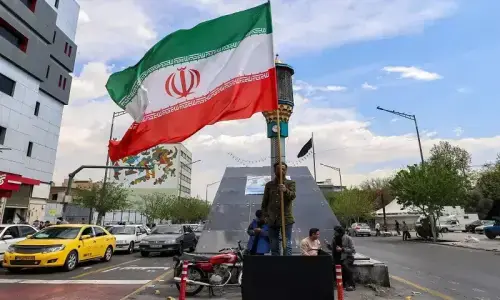
The report underscores that while the regional strategic environment has improved for Pakistan, Islamabad now would have to deftly manage its regional engagements, particularly with Central Asian Republics and Iran.
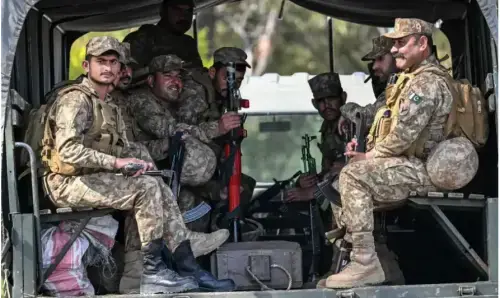
Safdar Sial, in his essay, said the last half of 2021 witnessed a major uptick in violence across the country.
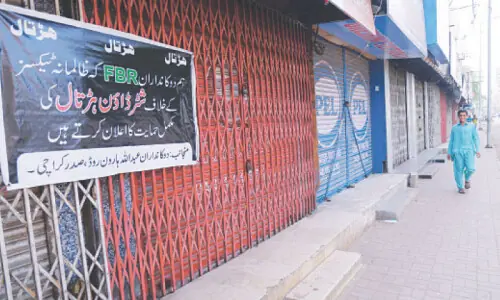
In the economic realm, financial market expert Faran Rizvi unpacked Pakistan’s economic and fiscal policy landscape. Economic challenges, he predicts, are likely to increase.
The report forecasts that the economy will grow by 4.8 per cent in FY22. Moreover, despite growth in exports, the current account deficit will increase on account of the import bills for petroleum and food products that are likely to almost treble. Fuel-induced inflation and increase in power tariffs would also increase the cost of production for the industrial sector.
Dr Ilyas Fazil, senior fellow IPI, analysed the energy security dynamics and called for prioritising the utilisation of local furnace oil to meet power sector’s demand and addressing the issue of high electricity tariffs.
Dr Javed Akram noted that while newer varaiants of Covid-19 are emerging, they are less potent than their predecessors.
Published in Dawn, February 1st, 2022