0
0

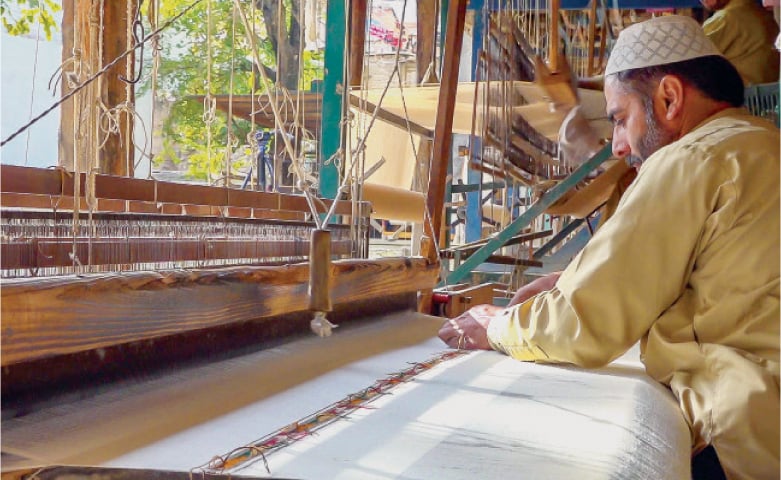
SWAT: The dealers associated with the famous handloom industry in Swat said that they were badly affected by the low demand for woolen shawls due to the Covid-19 pandemic.
They said that not only the low demand during the pandemic affected them financially but also the suspension of import of wool, yarn and other items used in the woolen shawls had bad impacts on the production of shawls.
“The high quality wool and yarn, which we use in the woolen shawl, come from China, Kora and Australia but the pandemic has also affected it and we cannot import them easily due to which we cannot produce sufficient shawls and other woolen products,” said Afazal, a dealer of woolen shawls in Salampur.
Salampur, a village near Saidu Sharif, is famous for its handloom industry and high quality of woolen shawls. About 70 per cent of the local people are connected with the industry, earning livelihood for their families. According to local dealers, Salampur houses more than 5,000 handlooms.
Dealers say items used in shawls could not be imported due to pandemic
The local artisans and workers, who used to earn handsome amount by weaving woolen shawls, said that they were also affected financially by the closure of the exports.
“At first we were affected by the lockdown when the handlooms were closed. Now suspension of imports of the stuff used in the woolen shawl from abroad has decreased our earnings,” said Azmat Ali, a local handloom artisan.
He said that he used to weave four woolen shawls a day but now he had to make one or two shawls due to decrease in the supplies of yarn.
The local leaders said that the handloom shawls of Salampur were identified by numbers instead of names. The price of a shawl ranges from Rs800 to Rs40,000. The special shawls made from camel wool cost up to Rs100,000.
The dealers said that before the outbreak of Covid-19, they would stock a large number of woolen shawls in their warehouses in the summer season and would supply them to the cold parts of the country before advent of winter.
However, they said that in the current year they prepared a lesser number of shawls owing to shortage of yarn and other items.
Published in Dawn, November 28th, 2021