0
0

LAHORE: The minorities in Pakistan are in a perpetual state of fear and there is little hope of improvement.
This was the consensus among the speakers at a session “Impact of Extremism on Religious and Sectarian Minorities” on the concluding day (Sunday) of Asma Jahangir Conference – 2021.
The well-attended session at Avari’s Khorshed Mahal was moderated by academic Pervez Hoodbhoy who at the outset highlighted the minorities’ plight which had its roots in the two-nation theory and the Objectives Resolution and how the very definition of the word was changed in 1974. He also spoke about the Hazara – the “double minority who had been systematically discriminated against” in Pakistan.
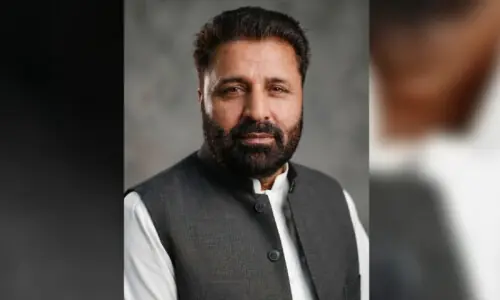
Lal Chand Malli, an MNA from Sindh’s Umerkot city, dilated on the impact of extremism and discrimination against the minorities who love the land they live in. “The Quaid-i-Azam encouraged us to live here and we are admirers of the Constitution of Pakistan,” he said. He also spoke about the efforts of the government which made a parliamentary committee to protect minorities against forced conversions and how the Council of Islamic Ideology (CII) scuttled the initiative.
The minorities could renovate their worship places but could not build a new one, he bemoaned.
“Temples and mosques are mere buildings and can be built and rebuilt but hearts once broken cannot be mended,” was Mr Malli’s moving remark which won him applause.
Human Rights Commission of Pakistan Secretary General Harris Khalique said there was “confusion” as to what the country should look like. “The Quaid-i-Azam spoke about inclusion and exclusion at the same time. He delivered a speech underscoring the need for safeguarding the rights of the minorities as equal citizens of Pakistan and also spoke on several occasions about the country being a laboratory where Islam would be experimented,” he said. The situation, he said, was a continuation of communalism problem in India.
Hazara community’s Jalila Haider, a human rights attorney, emphatically described how the state emboldened the extremists who subjected the minorities to heinous violations. “Those in the saddle even denigrate the protesters mourning the loss of dear ones,” she said.
“Every one claims there is justice in the country but where is justice,” she asked while holding back her tears.
Another panellist, Kulpana Devi, additional advocate general, Sindh High Court, regretted that the issue of forced conversions (of Hindu girls) had assumed an alarming proportion. Describing her association with the country, she said: “I am from the land of the Sufis. I have not migrated and am a proud Sindhi. I belong to the land of the founders of Pakistan and its constitution.”
Qamar Suleman, a member of Jamat-e-Ahmadiyya, vehemently spoke about how the government had failed to fulfill its obligations of ensuring citizens’ fundamental rights such as protection, health and education. He stressed the need for the civil society to stand up and be counted.
Published in Dawn, November 22nd, 2021