Julian Assange gets permission to marry in prison


LONDON: British prison authorities have given WikiLeaks founder Julian Assange permission to marry while in custody, his fiancee has said, as he awaits a key court decision over possible US extradition.
Assange, wanted by Washington to face various charges related to the mass leak of classified documents, plans to marry Stella Moris, a former member of his legal team with whom he has two children.
He is being held at Belmarsh high-security jail in London while the High Court prepares to rule on a US appeal against a lower court’s decision to block his extradition.
WikiLeaks said in a statement late on Thursday that the couple had launched legal action after they “were essentially being blocked from being able to marry”.
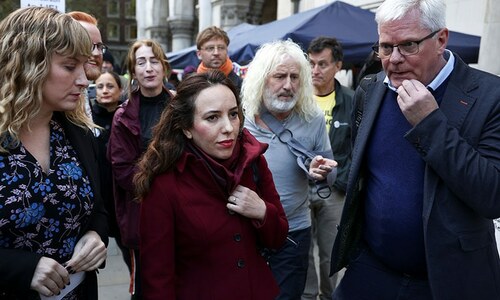
“Good news: UK government has backed down 24h before the deadline,” Moris wrote on Twitter alongside a photo of the pair standing beneath a rainbow.
“Julian and I now have permission to marry in Belmarsh prison.
“I am relieved but still angry that legal action was necessary to put a stop to the illegal interference with our basic right to marry.”
A Prison Service spokesperson said: “Mr Assange’s application was received, considered and processed in the usual way by the prison governor, as for any other prisoner.” Australian national Assange, 50, was arrested in Britain in 2019 for jumping bail, after spending seven years inside Ecuador’s embassy in London to avoid extradition to Sweden where he faced allegations of sexual assault. These were later dropped.
The US government has indicted him on 18 charges relating to WikiLeaks’ 2010 release of 500,000 secret files detailing aspects of military campaigns in Afghanistan and Iraq.
That could put him in jail for up to 175 years, although Washington’s legal team claims his possible sentence is difficult to estimate and could be far shorter.
However, UK district court judge Vanessa Baraitser ruled in January that it would be “oppressive” to extradite Assange because of his serious risk of suicide and mental health deterioration.
The US is currently appealing the decision, with the High Court set to rule within weeks on whether to send the case back to a lower court for fresh consideration.
Published in Dawn, November 13th, 2021