0
0
LAHORE: Hailing a local government department report suggesting binding industrial consumers to harvest rainwater as much as possible, a subsoil water expert urges the government to construct a quaducts in urban as well as rural areas to replenish the aquifer to meet the future water needs of a growing population.
A local government department committee has recently recommended that the factories should be made bound to harvest rainwater as far as possible and only the deficit should be met from the groundwater source. Strict rules and by-laws should be framed and implemented to obtain groundwater balance, the report by the committee has further proposed.
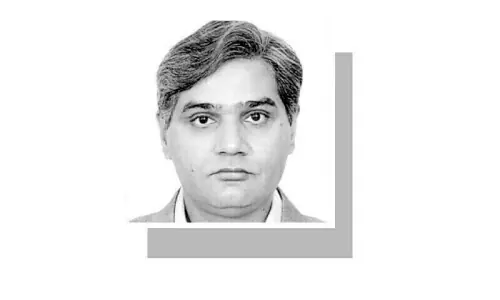
Advocating judicious use of subsoil water, groundwater expert Fouad Bajwa warns that water table is going down rapidly and replenishing the depleted aquifer may take up to 100 years. He suggests that harvesting rainwater by constructing ducts both in urban and rural areas immediately is the need of the hour.
He says that rainwater capture is also a solution to the disputes revolving around water scarcity among the federating units, particularly between Punjab and Sindh.
Mr Bajwa says if new housing societies are being developed on agriculture lands, extracting water from subsoil aquifers for domestic purposes, the farmers are also pumping out the groundwater to irrigate their lands as the canal channels are failing to fulfill irrigation requirements of their crops.
Concerned at the rising trend of sowing more and more water-guzzling crops like sugarcane and rice, putting extra stress on the subsoil water availability, Fouad Bajwa laments that the government is subsidising installation of solar waterpumps to the farmers, leading to overuse of the pumps.
He suggests that like in Florida in the US, lawns and greenbelts in urban centres should be developed at 25 degrees angle to direct rainwater to the ducts the government should develop on its own at multiple points and also ask the private housing societies to follow the suit.
Mr Bajwa cautions that if efficient water management is not introduced both in rural and urban areas, ‘ghost towns’ may become a destiny of the country in the near future due to the lack of water.
Published in Dawn, November 1st, 2021