WHILE the Afghan Taliban announced members of an interim ‘cabinet’ on Tuesday — the first step towards the formation of a new government — it is unclear if members of other political, tribal and ethnic groups will get a seat at Afghanistan’s governing table.
Nearly all of the key posts announced by the Taliban’s spokesman, from the prime minister, deputy prime minister, foreign minister etc, have been handed to senior Taliban clerics or leaders of the movement’s armed and political wings. “All groups have been represented,” claimed Taliban spokesman and new information minister Zabihullah Mujahid.
However, it was not immediately apparent whether members of the Tajik, Hazara and Uzbek communities are also part of the new ruling structure.
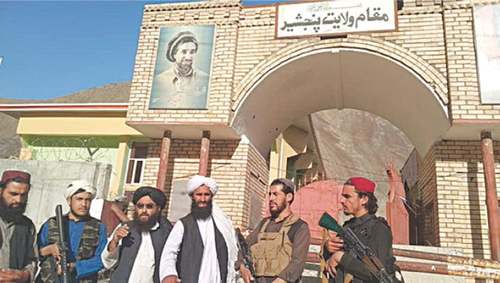
Moreover, on Monday the Taliban had entered Panjshir, up till now a staunch bastion of anti-Taliban opposition, and raised their black and white standard in the valley, cementing their hold over practically the entire country. Leading Taliban opponent Ahmad Massoud has vowed to fight on, yet with his rivals now controlling his home base, it remains to be seen how he will organise his resistance.
Read: Who are the key figures in the new Taliban government?
The key question confronting the Taliban now is that of international recognition. Taliban officials have said they want “strong and healthy” relations with other states. However, this is contingent on a number of things. Firstly, the Taliban need to assure the world that things will be different this time around compared to their previous stint, where respect for fundamental rights, including women’s rights, is concerned. Secondly, they must pledge to take action against foreign terrorists based on Afghan soil. Moreover, when they talk of an inclusive government, they must deliver on these promises. This means all of Afghanistan’s major ethnic groups and religious minorities as well as the country’s women must have a say in matters of governance.
Also, while they may have taken Panjshir, instead of opening a new front, the Taliban should urge the resistance based in the valley to join them at the negotiating table and reach a compromise. Afghanistan has witnessed decades of bloodshed and it is the duty of all groups, particularly the Taliban as they have now announced their cabinet, to prevent more conflict. The Taliban’s actions over the next few days and weeks will decide whether the international community grants the new set-up recognition. Therefore, it is in the best interests of Afghanistan for the country’s new rulers to create a truly inclusive administration.
Published in Dawn, September 8th, 2021