Iraqi doctors plead for donations as hospital fire deepens Covid crisis



BAGHDAD: No beds, medicines running low and hospital wards prone to fire Iraq’s doctors say they are losing the battle against the coronavirus. And they say that was true even before a devastating blaze killed scores of people in a Covid-19 isolation unit this week.
Infections in Iraq have surged to record highs in a third wave spurred by the more aggressive delta variant, and long-neglected hospitals suffering the effects of decades of war are overwhelmed with severely ill patients, many of them this time young people.
Doctors are going online to plea for donations of medicine and bottled oxygen, and relatives are taking to social media to find hospital beds for their stricken loved ones.
“Every morning, it’s the same chaos repeated, wards overwhelmed with patients,” said Sarmed Ahmed, a doctor at Baghdads Al-Kindi Hospital.
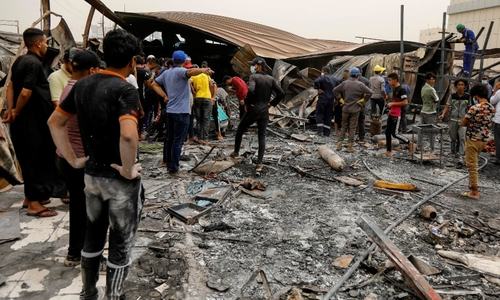
Widespread distrust of Iraq’s crumbling health care system only intensified after Mondays blaze at the Al-Hussein Teaching Hospital in the southern city of Nasiriyah, the country’s second catastrophic fire at a coronavirus ward in less than three months.
Days after the latest fire, the death toll was in dispute, with the Health Ministry putting it at 60, local health officials saying 88, and Iraq’s state news agency reporting 92 dead.
Many blame corruption and mismanagement in the medical system for the disaster, and Iraq’s premier ordered the arrest of key health officials.
Doctors said they fear working in the country’s poorly constructed isolation wards and decried what they called lax safety measures.
“After both infernos, when I’m on call I numb myself because every hospital in Iraq is at high risk of burning down every single moment. So what can I do? I can’t quit my job. I can’t avoid the call,” said Hadeel al-Ashabl, a doctor in Baghdad who works in a new isolation ward similar to the one in Nasiriyah. Patients are also not willing to be treated inside these hospitals, but it’s also out of their hands.
Iraq recorded over 9,600 new Covid-19 cases Wednesday in the highest 24-hour total since the pandemic began. Daily case numbers have slowly been rising since May. More than 17,600 people have died of the virus, according to the Health Ministry.
In April, at least 82 people most of them severely ill virus patients in need of ventilators to breathe died in a fire at Baghdad’s Ibn al-Khateeb Hospital that broke out when an oxygen tank exploded. Iraqs health minister resigned over the disaster.
Faulty construction and inadequate safety practices, involving in particular the handling of oxygen cylinders, have been blamed for the two hospital fires. The 70-bed ward at Al-Hussein Hospital was built three months ago using highly flammable interior wall panels, according to hospital workers and civil defense officials.
Inside one major Baghdad emergency room this week, relatives of Covid-19 patients sat on the floor because there were no chairs available.
With hospital space limited, Ahmed calls on Baghdads health directorate to advise him where to send patients. “They say, Send five patients to this hospital, another five to this other, and so on,” he said.
Hadeel Almainy, a dentist in Baghdad, resorted to Facebook to find a place for her Covid-19-stricken father, pleading: He can’t breathe, his skin is turning blue. The hospital couldnt take us.
In the southern city of Karbala, doctors have begged on social media for donations of remdesivir, an antiviral medication used to treat coronavirus patients.
Al-Shabl said medications and ventilators are running low at her hospital, and 60 per cent of the Covid-19 patients there need the breathing machines.
For the first time since the start of the pandemic, children have come to the hospital with severe virus symptoms, said Alya Yass, a pediatrician at Al-Numan Teaching Hospital in Baghdad.
Doctors blame widespread vaccine hesitancy for the current surge and fear the actual number of infections may be higher than ministry figures. Many Iraqis forgo testing because they don’t trust public hospitals.
Published in Dawn, July 17th, 2021