Anger mounts after 92 die in fire at Covid ward in Iraq



NASSIRIYA: The death toll from a fire that tore through a coronavirus hospital in southern Iraq rose to 92, health officials said on Tuesday, as authorities faced accusations of negligence from grieving relatives and a doctor who works there.
More than 100 people were injured in the blaze on Monday night in Nassiriya, officials said.
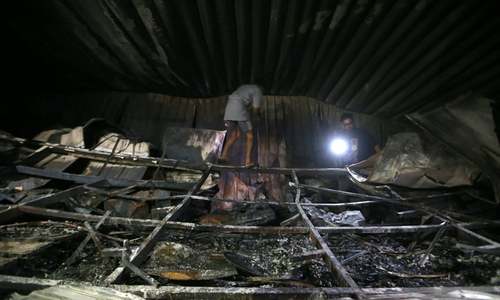
An investigation showed the fire began when sparks from faulty wiring spread to an oxygen tank that then exploded, police and civil defence authorities said.
It was Iraq’s second such tragedy in three months, and the country’s president on Tuesday blamed corruption for both. A statement from the prime minister’s office called for national mourning.
Rescue teams were using a heavy crane to remove the charred and melted remains of the part of the city’s al-Hussain hospital where Covid-19 patients were being treated, as relatives gathered nearby.
A medic at the hospital, who declined to give his name and whose shift ended a few hours before the fire broke out, said the absence of basic safety measures meant it was an accident in the making.
“The hospital lacks a fire sprinkler system or even a simple fire alarm,” he told Reuters.
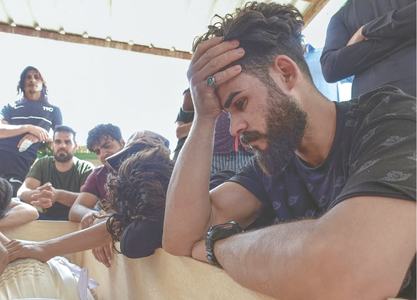
“We complained many times over the past three months that a tragedy could happen any moment from a cigarette stub but every time we get the same answer from health officials: ‘we don’t have enough money’.” While some bodies were collected for burial, with mourners weeping and praying over the coffins, the remains of more than 20 badly charred corpses required DNA tests to identify them.
In April, a similar explosion at a Baghdad Covid-19 hospital killed at least 82 and injured 110.
The head of Iraq’s semi-official Human Rights Commission said Monday’s blast showed how ineffective safety measures still were in a health system crippled by war and sanctions.
“To have such a tragic incident repeated few months later means that still no (sufficient) measures have been taken to prevent them,” Ali Bayati said.
Published in Dawn, July 14th, 2021