EU court says hijab can be banned at work under certain conditions


 44
44


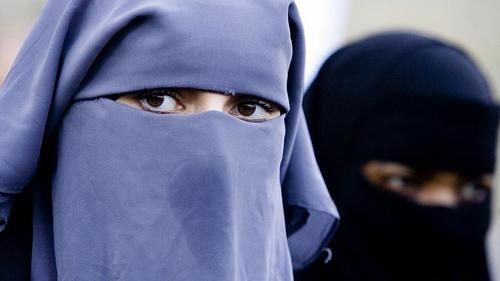
Companies may ban Muslim employees from wearing a headscarf under certain conditions, the European Union's (EU) top court said on Thursday in a ruling on two cases brought by women in Germany who were suspended from their jobs for wearing one.
The issue of the hijab, the traditional headscarf worn around the head and shoulders, has caused controversy across Europe for years and underlined sharp differences over integrating Muslims.
In the cases brought to court, both Muslim women — a special-needs carer at a childcare centre in Hamburg run by a charitable association, and a cashier at the Mueller drugstore chain — did not wear headscarves when they started in their jobs, but decided to do so years later after coming back from parental leave.
They were told that this was not allowed, and were at different points either suspended, told to come to work without it or put on a different job, court documents show.
The EU court had to decide in both cases whether headscarf bans at work represented a violation of the freedom of religion or were allowed as part of the freedom to conduct a business and the wish to project an image of neutrality to customers.
Its response was that such bans were possible if justified by an employer's need to present a neutral image.
"A prohibition on wearing any visible form of expression of political, philosophical or religious beliefs in the workplace may be justified by the employer's need to present a neutral image towards customers or to prevent social disputes," the court said.
However, that justification must correspond to a genuine need on the part of the employer, it said.
In the case of the care centre employee, the court said the rule at issue appeared to have been applied in a general and undifferentiated way, since the employer also required an employee wearing a religious cross to remove that sign.
In both cases, it will now be up to national courts to have the final say on whether there was any discrimination.
The EU court already ruled in 2017 that companies may ban staff from wearing hijabs and other visible religious symbols under certain conditions, sparking a backlash among faith groups.
More than five million Muslims live in Germany, making them the largest religious minority group there.
Headscarf bans for women at work have been a hotly contested issue in Germany for years, mostly with regard to aspiring teachers at state schools and trainee judges. This has not so far been a major theme in the campaign for this year's legislative elections.
Elsewhere in Europe, courts have also had to look into where and how headscarves can sometimes be banned at work.
France's top court upheld in 2014 the dismissal of a Muslim day care worker for wearing a headscarf at a private crèche that demanded strict neutrality from employees. France, home to Europe's largest Muslim minority, prohibited the wearing of hijabs in state schools in 2004.
However, Austria's constitutional court has ruled that a law there banning girls aged up to 10 from wearing headscarves in schools was discriminatory.