HK’s anti-China daily meets sudden death as assets frozen

HONG KONG: Hong Kong’s pro-democracy newspaper Apple Daily announced on Wednesday it would print its final edition after authorities arrested staff and froze its assets using a sweeping new national security law, silencing the independent media outlet.
The decision is the latest blow to Hong Kong’s freedoms and deepens unease over whether the international finance centre can remain a media hub as China seeks to stamp out dissent.
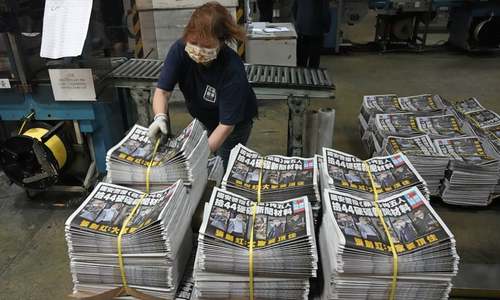
Small crowds gathered outside the paper’s headquarters on Wednesday evening, shouting messages of support and shining mobile phone lights as journalists put together the swansong edition. Reporters said they planned to print one million copies overnight — a staggering number given Hong Kong’s 7.5 million population.
“I have tens of thousands of words in my heart but I am speechless at this moment,” Ip Yut-kin, chairman of the paper’s parent company Next Digital, said.
Apple Daily has long been a thorn in Beijing’s side, with unapologetic support for Hong Kong’s pro-democracy movement and caustic criticism of China’s leaders.
Those same leaders have used a new security law to bring about its rapid demise.
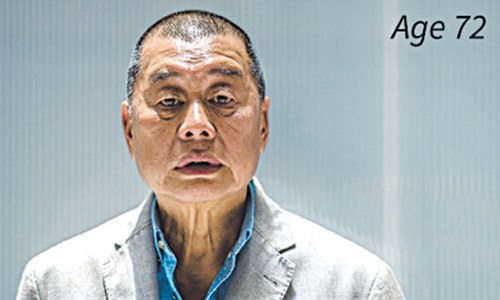
Owner Jimmy Lai, currently in jail for attending democracy protests, was among the first to be charged under the law after its imposition last year.
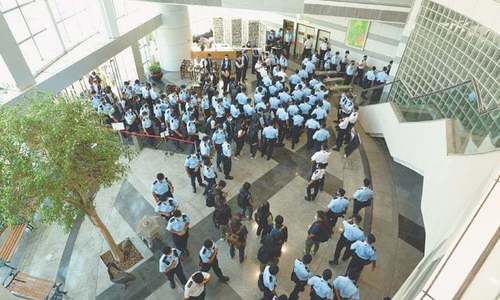
But the final chapter of the 26-year-old paper was written over the last week when authorities deployed the security law to raid the newsroom, arrest senior executives and freeze its assets. That last move crippled the paper’s ability to conduct business and pay staff.
On Wednesday, Apple Daily announced its closure “out of consideration for the safety of its staff”. Its website will go offline overnight. Some 1,000 people have lost their jobs.
The government-run science park that hosts the paper’s headquarters also chose on Wednesday evening to announce that the company was in breach of its lease and that legal steps were being taken to seize the building.
“Hong Kongers lost a media organisation that dared to speak up and insist on defending the truth,” eight local journalist associations said in a joint statement, as they called on colleagues to dress in black on Thursday.
British foreign secretary Dominic Raab accused Hong Kong’s authorities of spearheading a “forced closure” of the paper, describing it as “a chilling demonstration of their campaign to silence all opposition voices”.
Many local and international media outlets are now questioning whether they have a future in Hong Kong.
“Every journalist in Hong Kong now has a metaphorical gun pointed at their heads,” Sharron Fast, a lecturer at the University of Hong Kong’s journalism school, said.
“When the result of your writing can lead to lifetime imprisonment — you are being censored. Apple will not be the last — just the latest.”
Hong Kong has plunged down an annual press freedom ranking by Reporters Without Borders, from 18th place in 2002 to 80th this year. Mainland China languishes at 177th out of 180, above only Turkmenistan, North Korea and Eritrea.
China and Hong Kong’s authorities have hailed the security law for successfully restoring stability after the 2019 demonstrations and said media outlets must not “subvert” the government.
Authorities initially said the law would only target “a tiny minority”. But it has radically transformed the political and legal landscape of a city that China promised would be able to keep key liberties and autonomy after its 1997 return.
Published in Dawn, June 24th, 2021