Pakistan, UN chief seek debt suspension for mid-income nations



UNITED NATIONS: Pakistan has strongly supported UN Secretary General António Guterres’ suggestion that middle-income countries should have their debts suspended to cope with the social and economic impact of the coronavirus.
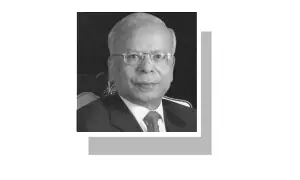
“It is important that we recognise the multiple dimensions of the vulnerabilities of middle-income countries in the criteria for accessing concessional resources and finance,” said Ambassador Munir Akram, who also heads the UN Economic and Social Council (ECOSOC).
The envoy identified “crippling debt, global economic inequalities and the effects of climate change and natural disasters” among the major problems confronting middle-income nations.
The UN chief, while explaining his proposal to “suspend mid-income nations’ debts into 2022,” pointed out that many among them were already dealing with mounting debt before the pandemic. “While the global response to the debt crisis is rightly attempting to support low-income countries, middle-income countries must not be left behind”, Mr Guterres said.
The UN chief, Ambassador Akram and other world leaders made this point while addressing a high-level meeting at the UN General Assembly on Thursday afternoon, which reviewed various proposals for helping middle-income countries who account for more than half of the UN’s 193 member states.
Middle-income countries are home to 70 per cent of the global poor. South Asia’s three major nations — India, Pakistan and Bangladesh — are also included in this category. With a combined population of 1.79 billion people, the three countries are also among the world’s most densely populated.
“The pandemic has uncovered the multiple vulnerabilities and inequalities that pre-existed in this diverse group of countries,” Ambassador Akram said. “Many of them have been hard hit by the pandemic.”
A UN report noted that the middle-income group includes both India, with a population of more than one billion, and Palau, with less than 20,000 people.
Besides population size, these countries also vary in economic activity, geography and income levels per capita, which ranges from $1,000 to $12,000 annually, meaning they often exceed per capita income thresholds for debt relief, the report added.
The global working-hour losses are projected at 14 per cent in the second quarter of 2020. The lower-middle-income countries will lose to a decline of 16.1 per cent. Remittance flows to low- and middle-income countries are expected to decline by $109 billion in 2020, or 19.7 per cent, relative to 2019.
The World Bank estimates that 270 million people in low- and middle-income countries were expected to face acute food insecurity at the end of 2020.
Published in Dawn, June 19th, 2021