In Kabul visit, Gen Bajwa reiterates support for Afghan peace process as violence surges

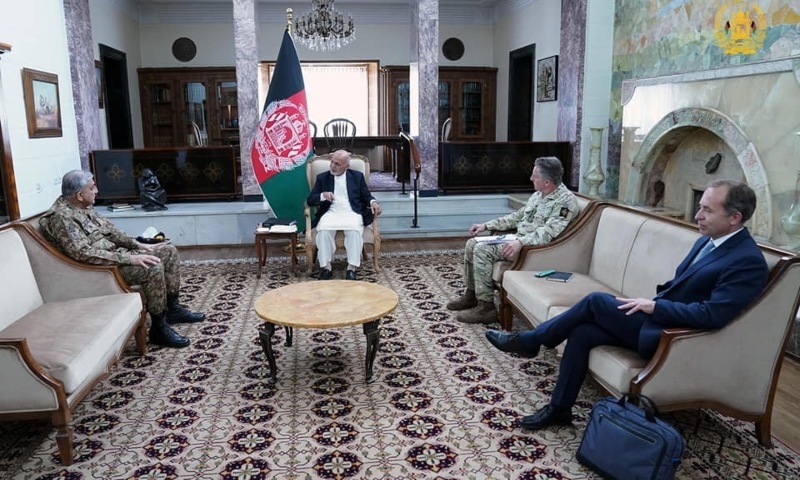
Army Chief Gen Qamar Javed Bajwa offered Pakistan's support for the Afghanistan peace process in a meeting with President Ashraf Ghani in Kabul on Monday amid growing violence as the United States withdraws its troops.
The army chief was accompanied on the day-long official visit to the Afghan capital by Director General of Inter-Services Intelligence (ISI) Lt Gen Faiz Hameed.
Pakistan is a key player in efforts to resolve the conflict between the Western-backed government and the Taliban insurgents.
Gen Bajwa reiterated to Ghani that “a peaceful Afghanistan means a peaceful region in general and a peaceful Pakistan in particular,” an Inter-Services Public Relations (ISPR) statement said.
Read: Ending the ‘forever war’
“We will always support 'Afghan led-Afghan owned' Peace Process based on mutual consensus of all stakeholders,” it said.
Matters of mutual interest, current developments in the Afghan Peace Process, enhanced bilateral security and defence cooperation and the need for effective border management between the two countries were also discussed during the conversation.
"Afghan president thanked COAS for a meaningful discussion and appreciated Pakistan's sincere & positive role in Afghan Peace Process," the ISPR said.
Gen Bajwa was accompanied at the meeting by British Chief of Defence Staff Gen Nicholas Patrick Carter. Britain still has troops in Afghanistan in a war that started with the overthrow of a Taliban government following the 2001 attacks by militants in the United States.
The army chief later called on Chairman of the High Council for National Reconciliation of Afghanistan Dr Abdullah Abdullah and discussed matters related to the peace process.
In recent weeks, Pakistan has been negotiating with the insurgents to try to get them to commit to a ceasefire, Taliban and diplomatic sources have told Reuters.
Islamabad is also trying to persuade them to agree to an extension of the US-Taliban agreement which stipulated US and other foreign forces should withdraw by May, and to continue to take part in planned peace talks in Turkey.
But violence has risen starkly in recent weeks as the US forces pull out.
The Taliban announced on Sunday they would commit to a three-day ceasefire for the Eid holiday later this week.
Afghanistan's presidential palace said on Monday the security forces would also observe the ceasefire.