1
1
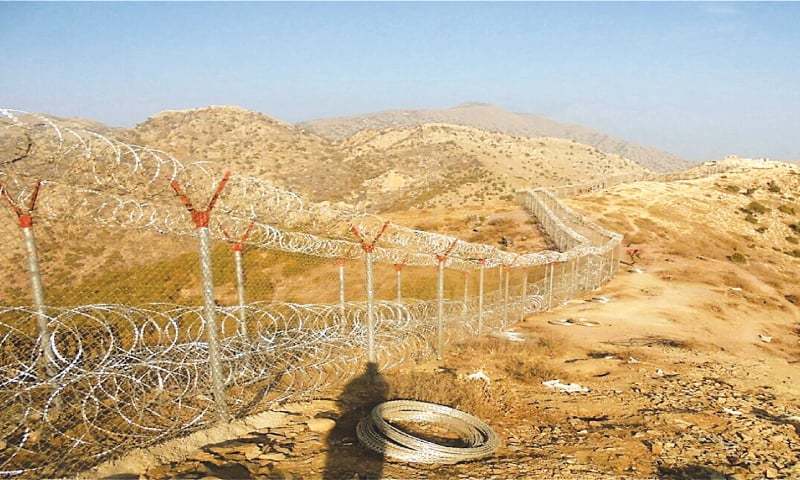

THIS is apropos the news ‘US to revive duty-free zones in Pakistan, Afghanistan’ (April 30) which talked about the possible introduction of a bill in the US Senate for funding duty-free industrial zones in regions bordering Pakistan and Afghanistan.
Having observed the fate of some earlier similar adventures on the Pakistan side of the border over the last 50 years, most funded by the Pakistan government and some by donors, like the USAID, the introduction of the proposed bill in the US Senate can likely lead to another round of disaster.
The first serious set of industrial development interventions in areas along the Pakistan-Afghan border took place during the Bhutto period, wisely disbanded in the early 2000s. Industrial projects were undertaken in most of the former tribal agencies by the now-defunct Federally Administered Tribal Areas (Fata) Development Corporation.
Over a period of some 40 years, the zones remained economically inefficient and unsustainable. The portfolio included textiles, match factories, fruit processing and canning, vegetable oil extraction, etc. A subsequent experiment was the creation of the Gadoon Industrial Estate conceived jointly by the USAID and Pakistan government. This was a spectacular disaster undertaken during Gen Ziaul Haq’s period.
Why such misadventures backfire is due to a variety of reasons. Suffice to say, let us learn from history and not indulge in further misadventures at the cost of taxpayers; both Pakistani and American.
At best, the US ‘investment’ might lead to limited ‘stabilisation’, but definitely not to sustainability. The region bordering Pakistan-Afghanistan is a ‘parallel’ world that defies conventional values, judgments and governance.
The British learnt it the hard way after fighting three costly Afghan wars during the 19th and the 20th centuries. Based on the lessons learnt, they then developed a unique ‘tribal management’ mechanism to stabilise — though not necessarily develop — the region. The Russians struggled for 15-20 years and then simply moved out of Afghanistan.
The US presence in the region is perhaps at the end of a learning curve, but the end result is still shrouded in clouds. Pakistan, which inherited the time-tested British ‘tribal management’ institutions and lessons, did manage to loosely keep the region stable from 1947 till the 1970s.
Now it has little to offer, given the vacuum created in the region by the long-drawn fighting as well as the debatable decisions made during the recent past to bring in the tribal regions within the folds of mainstream governance.
There are no short-term solutions for getting sustainable positive changes in the region. The best course of action is to have long-term plans and strategies for developing human capital of that region. Not that this has not been tried in the past. But then it was not a priority and there was limited commitment on the part of the implementers. Also, our privileged class took advantage of the loopholes.
In short, the stakeholders need a perspective plan covering a 20-30-year period to develop the human capital of the region. Most importantly, this should be in the context of the region, its culture, values, history and norms. Are the stakeholders — Pakistan, the US, Russia, China, Iran, Turkey and India — ready?
Tariq Durrani
Islamabad
Published in Dawn, May 9th, 2021