PM asks Economic Advisory Council to propose relief measures



• Concern expressed over slow PSDP utilisation
• Private members refer to frequent taxation changes, exemptions withdrawal
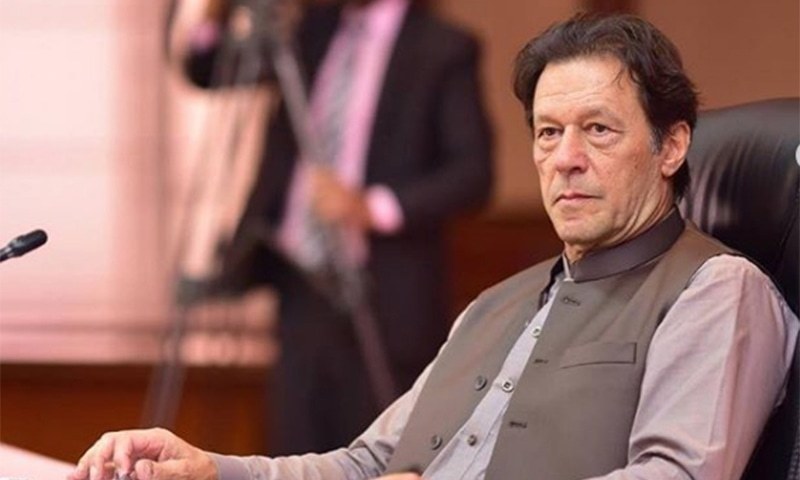
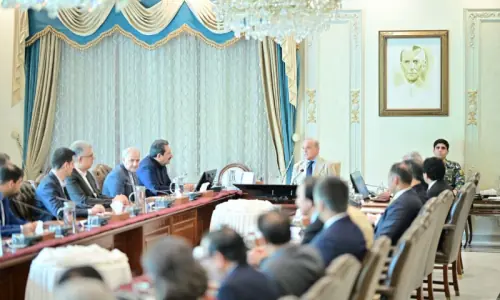
ISLAMABAD: With concern from members on high inflation, unemployment and low growth, Prime Minister Imran Khan on Thursday asked the newly created Economic Advisory Council (EAC) to propose measures for relief to the people rather than imposition of more taxes.
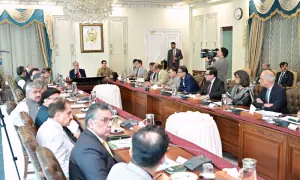
Finance Minister Shaukat Tarin chaired the first session of the EAC meeting. The prime minister presided over the second session through videolink.
“The most important expectation I have from you (EAC) is to suggest out-of-box solutions as to how to reduce prices,” an official quoted the prime minister as saying.
He assured the EAC members that their recommendations would be actively pushed through for implementation.
The meeting decided to meet again before Eidul Fitr. The participants agreed that detailed homework be completed to ascertain if there was the need for renegotiation of the International Monetary Fund (IMF) programme and if valid reasons were there for renegotiations.
The participants expressed serious concern over slow utilisation of Pubic Sector Development Programme (PSDP) and noted that while the government had changed PSDP mechanism by authorising relevant ministries for spending, the ministries appeared to have no spending capacity.
The private members reiterated that best thing the government could provide for economic and business growth was the consistencies in the economic policies and referred to frequent changes in taxation including withdrawal of tax exemptions as discouraging signals.
The EAC in its maiden meeting formed a series of working groups on economic growth, prices, interest rates and central banking, taxation and FBR, agriculture, energy social protection and governance. For example the group on macroeconomy led by Dr Ishrat Husain would comprise Dr Rashid Amjad, Saleem Reza, Dr Ejaz Nabi and Abid Qayyum Sulehri.
The group on energy would be convened by Minister for Energy Hammad Azhar while Dr Sania Nishtar would lead another group on social safety nets. Syed Fakhar Imam and Mukhdoom Khusro Bakhtyar would jointly lead the group on agriculture and food.
The prime minister said the basic objective for creation of the EAC was to benefit from the recommendations of the country’s economic experts to put the national economy on sustainable growth path. He said that because of prevailing tough economic conditions, the member should come up with out-of-box solutions for providing relief to the people instead of burdening them with more taxes.
Mr Tarin welcomed all the official and private members and emphasised the importance of evolving consensus on macroeconomic stabilisation measures and reform agenda for an inclusive and sustained economic growth after taking all stakeholders on board. The EAC will follow a consultative process and suggest policy initiatives to optimise and further strengthen the financial and economic policies aimed at enhancing public welfare.
The finance minister formulated sub-groups and assigned areas for further deliberation and directed to firm-up proposals after seeking input from all concerned.
Mr Tarin emphasised to present short-, medium- and long-term plans with respective timelines for an effective way forward. The EAC will meet frequently and members would present recommendations for detailed discussion.
SAPM on Revenue Dr Waqar Masood outlined key priority areas for productive discussion including sustained and inclusive economic growth, employment generation, price stability mechanism, tax reforms, housing sector, ease of doing business, pension reforms, rationalisation of subsidies, food security, revamping power and energy sectors, social protection network, health and improvement in overall governance.
The private members highlighted need for policy actions regarding strengthening blue economy, need for road-to-market infrastructure development, import substitution, mechanised farming, gender-sensitive employment initiatives, harmonising tax and tariff structures, climate change, SMEs, and streamlining circular debt and other power related issues.
Published in Dawn, April 23rd, 2021