Time for economists to say their piece

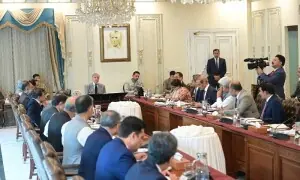
Members of the reconstituted Economic Advisory Council (EAC) are confident. They believe the road ahead may be arduous but reaching the destination is possible if a road map is developed with care and drivers follow the directions diligently.
The prime minister–led new EAC is expected to do the impossible: evolve a policy mix that delivers stabilisation and growth simultaneously. Will the initiative fly this time around or dash before the take-off like before?
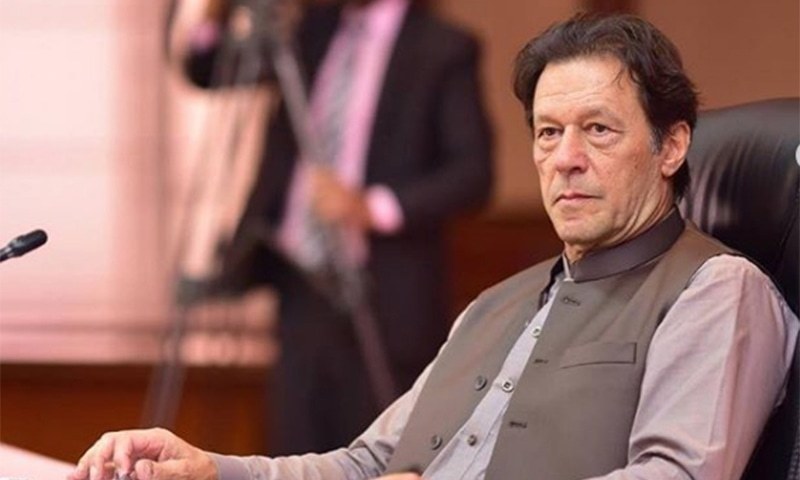
“Prime Minister Imran Khan is keen to improve the economy and the quality of governance. The twin-headed spectre (inflation and unemployment) haunts him. He clearly wishes to turn things around and ease crippling pressure on families. He is open to ideas to fix key problems. Strategies will develop once the EAC mobilises but there is little doubt Mr Khan is committed to action,” said Salim Raza, former governor of the State Bank of Pakistan (SBP), while commenting on the prospects of the 26-member EAC.
Earlier, the ruling PTI announced the creation of the EAC soon after it assumed power in 2018 to seek professional advice on economic policies. The last EAC, however, is remembered for the controversy it stirred when Dr Atif Mian, a globally reputed economist, was dropped from it for faith-related reasons. His exit was followed by the resignation of his peers, Dr Asim Ijaz Khawaja and Dr Imran Rasul.
Members of the newly constituted Economic Advisory Council comment on key policy issues facing the country
“I had my doubts but the haste shown by the prime minister to publicly share his future economic plans takes the wind out of the EAC sails,” a critical EAC member who wished not to be identified commented.
He was referring to the prime minister’s statement about renegotiating the IMF deal as soon as the $500m tranche was released in addition to the statement about initiating the second round of direct cash relief for the needy under the Ehsaas programme. The IMF tranche was released on March 31 after the revival of the stalled $6bn bailout package.
When asked to list the top three issues, most members were hesitant. They said they would share views after the EAC’s initial few meetings. Those who responded did list issues they considered most critical.
Abdul Razak Dawood, adviser to the prime minister on commerce and investment, commented: “The higher pace of industrialisation is vital to boost growth and exports. Three most urgent issues awaiting firm decisions are: tariff rationalisation by further reducing duties on raw materials and intermediaries, incentives for selected sectors to diversify exports, long-term financing for expansion and modernisation in selected industries.”
Dr Rashid Amjad, former vice chancellor of the Pakistan Institute of Development Economics, had a more overarching view. Responding to Dawn’s query, he stated: “My three priorities would be: relief measures to deal with the third wave of Covid-19, including a second round of Ehsaas direct income support (as the prime minister mentioned) plus subsidies on essential food items funded by, if possible, from the IMF Special Support Fund (as in the first round) or alternatively from the budget.
‘Everyone knows what an IMF programme entails: demand contraction enforced via higher interest rates, devaluation and the abrupt withdrawal of subsidies’
“Second, sparking higher growth (around 4.5pc) next year while ensuring macroeconomic stability built on increasing exports and attracting higher domestic and foreign investment (and hopefully continuing high remittances).
“Third, shifting the focus of development expenditures, including those funded by the World Bank, ADB, IDB, CPEC and others, towards creating more and better jobs. This would require moving to more employment-intensive, low gestation projects as well as local employment generation schemes in the next annual development plan, especially in areas badly hit by Covid-19.”
Taking a clear position on the issue of the SBP autonomy, eminent economist Dr Ijaz Nabi said: “The SBP is staffed with technically competent economists, much more so than our other economic policymaking forums. An independent SBP can enforce fiscal discipline, if the Ministry of Finance doesn’t. This discipline is critical for sustained economic growth and employment creation.” He thought it was important to break free of the boom-and-bust cycle that repeatedly visited the country over the past three decades.
“Fiscal imprudence and the balance-of-payments crises have disrupted episodes of growth regardless of which political party was in power. To avoid sovereign default, our first line of defence has become the IMF, which is meant to be the lender of last resort. Everyone knows what an IMF programme entails: demand contraction enforced via higher interest rates and devaluation and the politically difficult abrupt withdrawal of subsidies and concessions.”
Lucky Cement CEO Muhammad Ali Tabba, nominated to represent the private sector in the EAC among others, messaged a concise view on where he wishes to see action: “Tax reforms, export competitiveness and long-term energy policy.”
Some key members of the EAC did not find the prime minister’s haste unusual. “Watching the political capital erode is not easy for an elected leader. He can’t be oblivious to the expected impact of the pending tougher decisions (30pc hike in power rates etc) on the electorate,” commented an expert privately.
“The PTI government has realised that more needs to be done to deliver on election promises. To size up to deal with the glaring challenges, the prime minister reconstituted the EAC,” he added.
A close watcher of the economy highlighted the perils of ignoring the pandemic. “Yes, there is a lot that needs attention but during the pandemic, nothing can take precedence over saving lives. Securing vaccines for people must be at the top of the agenda. The lacunas hampering private imports should be removed, keeping the government’s limitations in sight.”
He thought keeping critical voices like Dr Hafiz Pasha out of the loop will compromise the purpose of the EAC.
Published in Dawn, The Business and Finance Weekly, April 12th, 2021