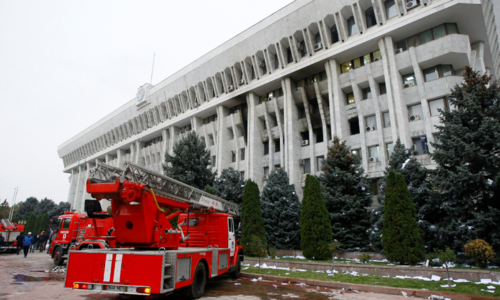
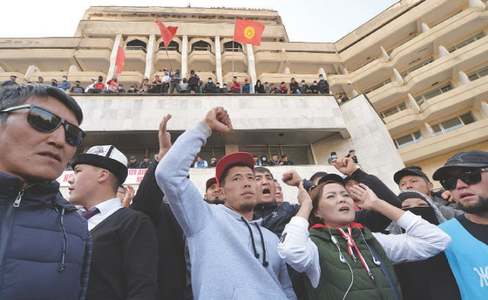
BISHKEK: Voters in Kyrgyzstan supported handing greater powers to the presidency in a referendum on Sunday, confirming public trust in the populist head of state Sadyr Japarov, although the turnout was low.
The constitutional reform will bring the political system of the Central Asian nation closer to that of its ex-Soviet neighbours, such as Kazakhstan and Uzbekistan, making it easier for Japarov to push through his policies.
Japarov and his supporters also hope a strengthened presidency will make the country more stable after violent revolts toppled its leaders in 2005, 2010 and in 2020, when Japarov was catapulted from a prison cell and into office.
Preliminary Central Election Commission data based on 75 per cent of ballots found a majority of voters – 79pc — supported the reform, although total turnout was just above the 30pc threshold required to make the referendum valid.
Kyrgyzstan borders China and is allied with Russia.
A poll commissioned by the United States-based International Republican Institute and published this month found Japarov was by far the most trusted politician in the country.
The percentage of voters who believed Kyrgyzstan was heading in the right direction jumped from 41pc last August — when Japarov’s predecessor Sooronbai Jeenbekov was in charge — to 70pc in February and March, the poll data showed.
Violent protests
Japarov proposed the reform after being swept to power last October by violent protests that were triggered by the announcement of pro-Jeenbekov parties’ landslide victory in a parliamentary election.
A former member of parliament and senior official, Japarov had been serving a prison term for his role in the kidnapping of a regional governor as part of a political protest. His sentence has since been overturned.
In contrast to its neighbours, when Kyrgyzstan gained independence from the Soviet Union in 1991, it adopted a political system that allowed both parliament and the presidency to wield significant powers, forcing its leaders to seek the backing of broader elites.
“I voted against (the reform) because this is a power grab,” said a 32-year-old entrepreneur who only gave his first name, Bakyt. “All the power must not be given to one person.” Another businessman, Turdubek, said he believed the reform was for the better.
“I am no specialist in legislation, but I trust the specialists who drafted the new constitution. They too want a better life for the people.”
Published in Dawn, April 12th, 2021