Ex-envoy to Delhi slams Nawaz’s ‘pandering’ of Modi


NEW DELHI: Former prime minister Nawaz Sharif unilaterally pandered to Indian Prime Minister Narendra Modi’s priorities in bilateral ties, refused to mention the Kashmir dispute in their meeting in Delhi and kept Pakistan’s envoy in New Delhi out of the loop while conducting secret talks with Mr Modi through an Indian businessman, according to former high commissioner Abdul Basit.
He told veteran anchor Karan Thapar in an interview for The Wire portal on Tuesday that Mr Sharif’s senior advisers Sartaj Aziz and Tariq Fatemi were party to the unusual approach in conducting ties behind the back of Pakistan’s envoy in New Delhi.
All of them were “pandering to India unilaterally and unconditionally,” Mr Basit said in the interview, which discussed his book Hostility, a memoir of his three years posting in India from 2014 to 2017.
Mr Aziz and Mr Fatemi, had “apologetic mind-sets” and were more keen to accept “Modi’s contentions and work quickly to assuage Modi’s concerns” rather than stand up for Pakistan’s interests, Mr Basit said. Former foreign secretary Aizaz Ahmad Chaudhry too was “brazenly apologetic and improvident” and at the time of the 2015 joint statement “wanted to deliver (to India) no matter what”.
Mr Basit said Indian businessman Sajjan Jindal played a critical role carrying secret messages between the two prime ministers, on matters ranging from meetings with Hurriyat leaders to the Kulbhushan Jadhav case. “Right from the word go Pakistan has mishandled the Kulbhushan Jadhav case,” he said and added it’s “gradually losing its credibility in the matter”.
Mr Basit spoke of how he was repeatedly and deliberately excluded from India-Pakistan meetings or communications, specifically at the behest of Prime Minister Sharif whose foreign secretary humiliated him by telling junior officers not to communicate with him without the foreign secretary’s permission. Mr Basit revealed how over the Kulbhushan Jadhav matter he received a letter of reprimand, again from a junior officer, which effectively minimised him and tied his hands.
The book will be published sometime in April but its entire contents were made available by email to Mr Thapar who said its contents were explosive.
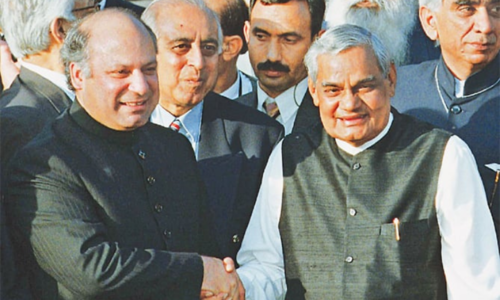
Asked on what grounds he claimed Mr Sharif pandered to India unilaterally and unconditionally, Mr Basit said: “I watched our leader very very closely. I make this assertion on the basis of what I have seen when Nawaz Sharif came for Modi’s inauguration. It was uncalled for to unilaterally free Indian fishermen as a gesture of goodwill. At the meeting in Delhi Nawaz Sharif kept silent on Kashmir. He did not mention Kashmir even a single time. He also did not seek a meeting with Hurriyat. I had suggested he should.”
Published in Dawn, March 24th, 2021