IN March, when China and Europe were hit hard by the virus, Pakistan reported its first coronavirus death; at an isolation centre in Mardan. At the time, fear and panic about the potentially lethal new virus that was shutting down healthcare infrastructure and paralysing economies across the world with a vengeance was palpable. Local news reports about the poor health screening of returning pilgrims from Iran, which was another Covid-19 hotspot, sent alarm bells ringing for authorities, as the potential for the virus to wreak havoc in an already economically-stressed country of 220 million was frightening. Yet, despite the worst fears, some very real challenges and a bitter rivalry between the government and opposition, Pakistan overcame the first wave and managed to flatten the curve. In fact, we were lauded internationally for a promising response to the pandemic, with the term ‘smart lockdown’ being debated as the pragmatic way forward to save both lives and livelihoods.
Fast forward a few months, and the government had turned this success story into a tale of caution rather than anything else. The threat of Covid-19 and the very serious consequences of the virus appeared to be largely absent from the nation’s collective imagination. The early system of testing passengers at airports was largely forgotten, and national testing itself remained abysmally low. Even the Sindh government, which had initially come across as the frontrunner in imposing the SOPs, was a ghost of its earlier self during the second wave. In Khyber Pakhtunkhwa, another province that seemed to be approaching the crisis logically earlier, things were murkier later in the year.
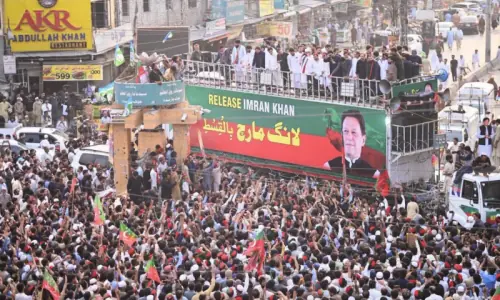
As the year came to a close, Pakistan was experiencing a difficult winter due to the second wave of Covid-19. Hospitals were getting exhausted and the number of patients on the ventilator was growing steadily. Social media, too, was flooded with accounts of users who shared updates of critically ill family members or friends. And, yet, life in many – actually, most – parts of the country appeared to be ‘normal’; not the ‘new normal’, just ‘normal’, dotted with weddings, private parties, mass funerals, political rallies and, indeed, shopping. Mask-wearing and distancing, though technically mandatory, was still taken by many as optional.
It was not surprinsing, as such, that towards the end of the year, the daily toll was 60-80 cases, with new infections averaging at about 2,000 per day. It did not have to be this way though. What started out as a promising strategy to battle the pandemic in the first half of the year, tragically, was pretty much a thing of the past in the second half.